Rundgang 2026 - Program Excerpt
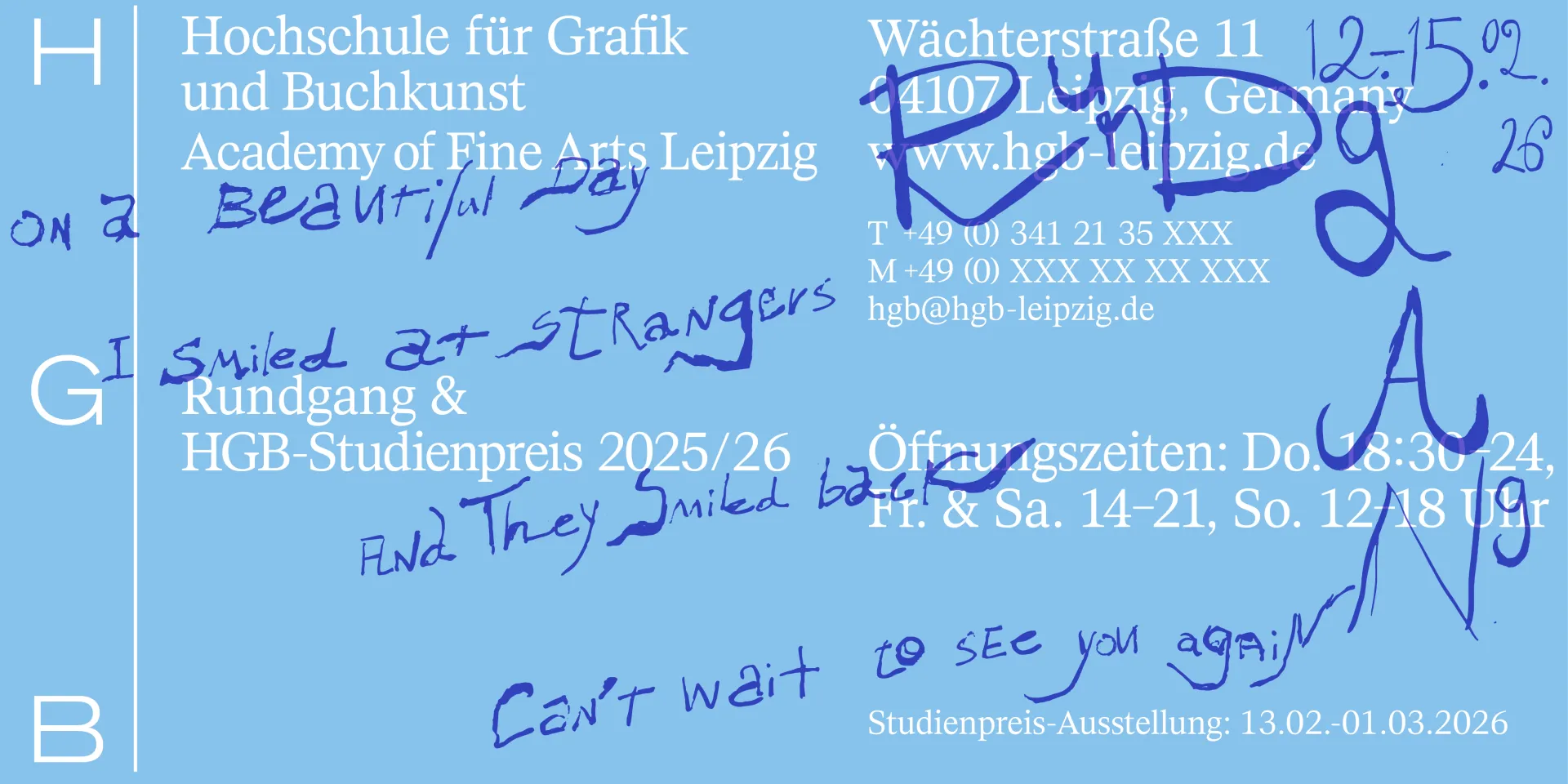
The winter semester at the HGB traditionally ends with the Rundgang: In a variety of exhibitions, performances, installations and work presentations, students, teachers and staff show what they have been working on during the current academic year. Works and projects from the four disciplines of book art/graphic design, photography, painting/graphics and media art will be presented, accompanied by a series of events. Once again this year, the entire university building will be used for the exhibitions and presentations, i.e. the ballroom, corridors and classrooms.
>>> Download Booklet
Parallel to the Rundgang, the 2025/26 Study Prize of the HGB Friends e.V. and Sparkasse Leipzig will be awarded.
Opening hours: Thu. 6:30pm, exhibitions until 10pm, building until 12pm, Fr. & Sat. 2pm-9pm, Sun. 12am-6pm
7:00–8:00 p.m., HGB Gallery
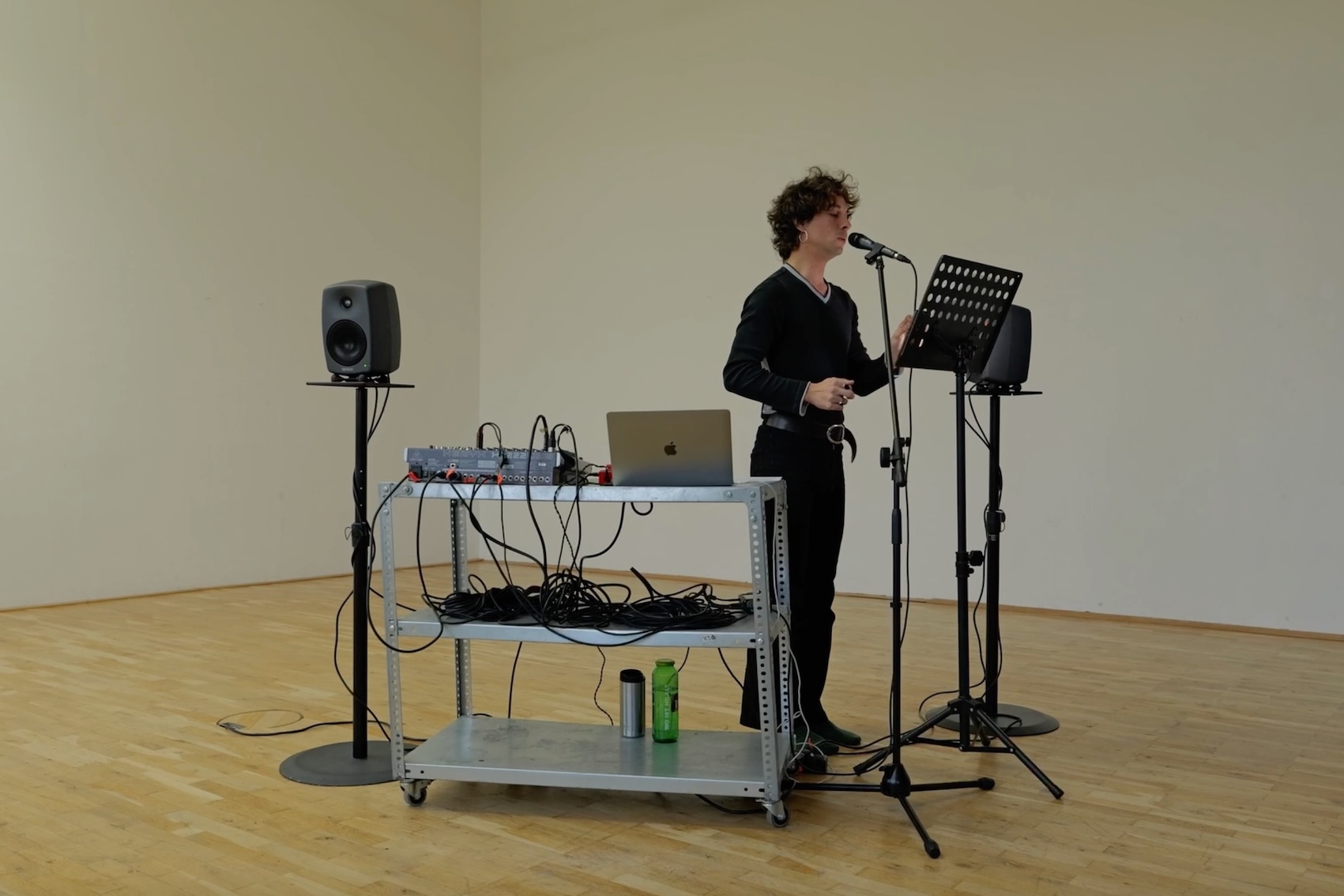
Robin Becker: Technologies of the Voice
Lecture performance cantata for solo vocalist
7:00–10:00 p.m., 3.43
C.Bain, Jannis Weu: It's your fault that everybody dies
Performance
8:00 p.m.–midnight, Lichthof
Simón Jaramillo Vallejo: Diversity Strip / Franja de Diversidad
DJ sets and performances
Line-Up
20:00 – 20:30 Every part of your body hugs my body (Dance Performance)
20:30 – 21:30 Q
21:30 – 21:45 standing here with you (short film)
21:45 – 22:45 Malandrea
22:45 – 23:45 BNYI
23:45 – 00:45 Djam Siam
8:00 p.m.–midnight, Ex-Café
Diversity Bar
HGB × Distillery: Rundgang Afterparty
11:59 p.m.–8:00 a.m.
Box office: €13 until 2:00 a.m., €15 after 2:00 a.m.
Distillery, Eggebrechtstraße 2, 04103 Leipzig
Friday, February 13
3:00–7:00 p.m., 3.43
C.Bain, Jannis Weu: It's your fault that everybody dies
Performance
5:00–6:00 p.m., HGB Gallery
Robin Becker: Technologies of the Voice
Lecture performance cantata for solo vocalist
5:00–6:00 p.m., 1.28Asya Volodina: Karaoke of SilencePerformance
6:00–6:20 p.m., starting in the atrium until 1.49
Josie Klee: How do you spell revolution
Performance
Saturday, February 14
1:00 p.m.–5:00 p.m., Library
Duplicate sale
3:00 p.m.–7:00 p.m., 3.43
C. Bain, Jannis Weu: It's your fault that everybody dies
Performance
4:30 p.m.–5:30 p.m., Ground Floor East Wing
Jagg L. Teser & Nele Steffens (course “Live Arts and Performativity” with Sarafina McLeod): Stempmission performative invention
5:00–6:00 p.m., HGB Gallery
Robin Becker: Technologies of the Voice – a lecture performance cantata for solo vocalist
Performance
Sunday, February 15
12:00-13:00, Atrium
To Fabek: radical kidz space
An open space for children and for anyone who feels like playing, creating, or just hanging out together.
5:00–6:00 p.m., HGB Gallery
Robin Becker: Technologies of the Voice
Lecture performance cantata for solo vocalist
The HGB Friends and Sparkasse Leipzig Study Prize 2025/26 will be awarded at 4:30 p.m., followed by the opening of the winners' exhibition in the HGB Gallery.
Award ceremony & exhibition opening: Thursday, February 12, 2026, 4:30 p.m., HGB Gallery
Speakers: Steffen Woyth (Deputy Chairman of the Board), Dr. Harald Langenfeld, Chairman of Sparkasse Leipzig
The winners of the 2025/26 Study Prize will exhibit their award-winning works in the HGB Gallery. The exhibition will remain on display in the gallery until February 27 after the tour. More information...
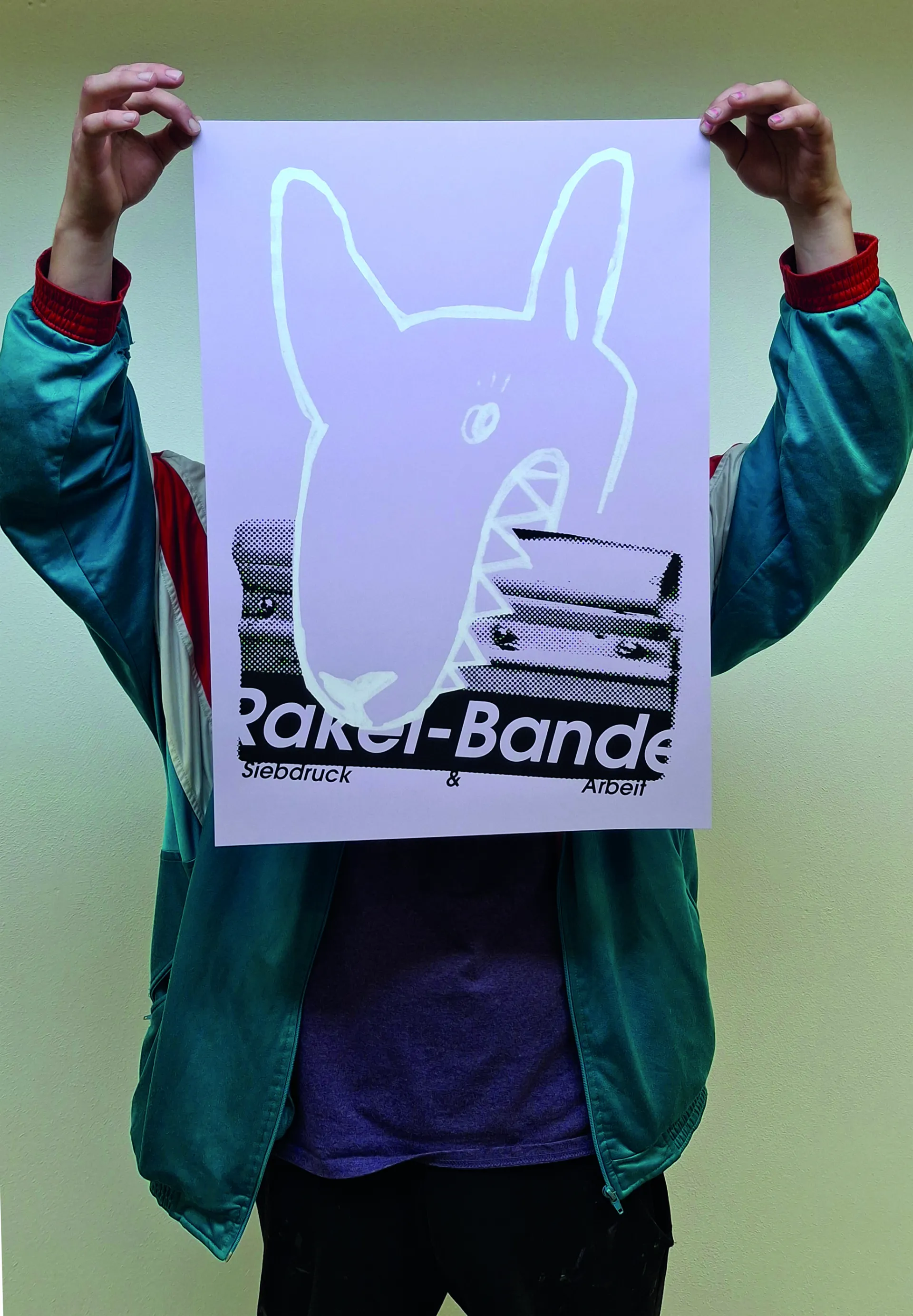
The medium of screen printing: (a bottomless pit) Color research, archival material, spaces and grids, photography and the relationship between it and a printing technique that could hardly be more multifaceted. A broad field opens up: narratives, techniques, discussions that go beyond the pure possibility of printing.
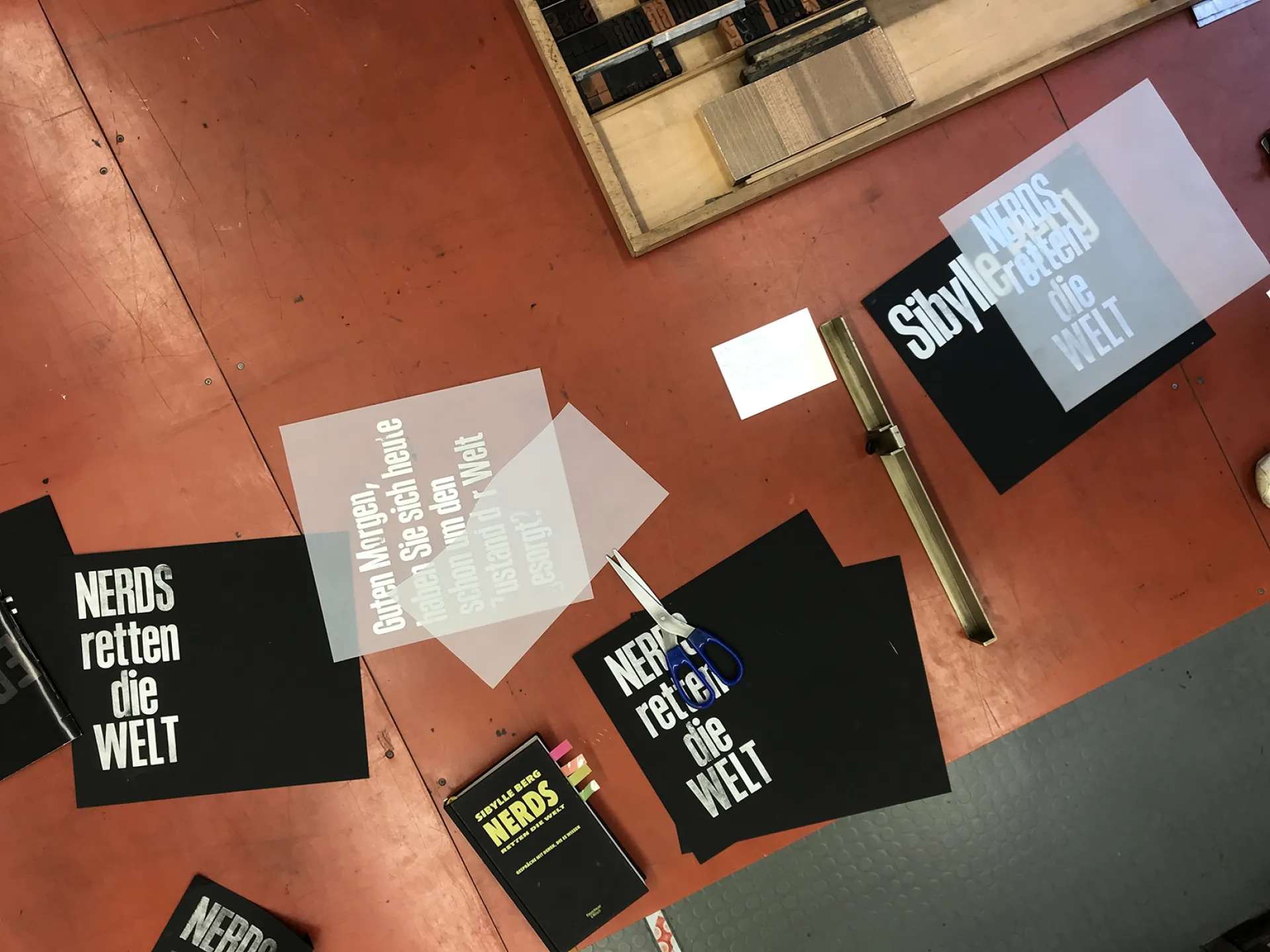
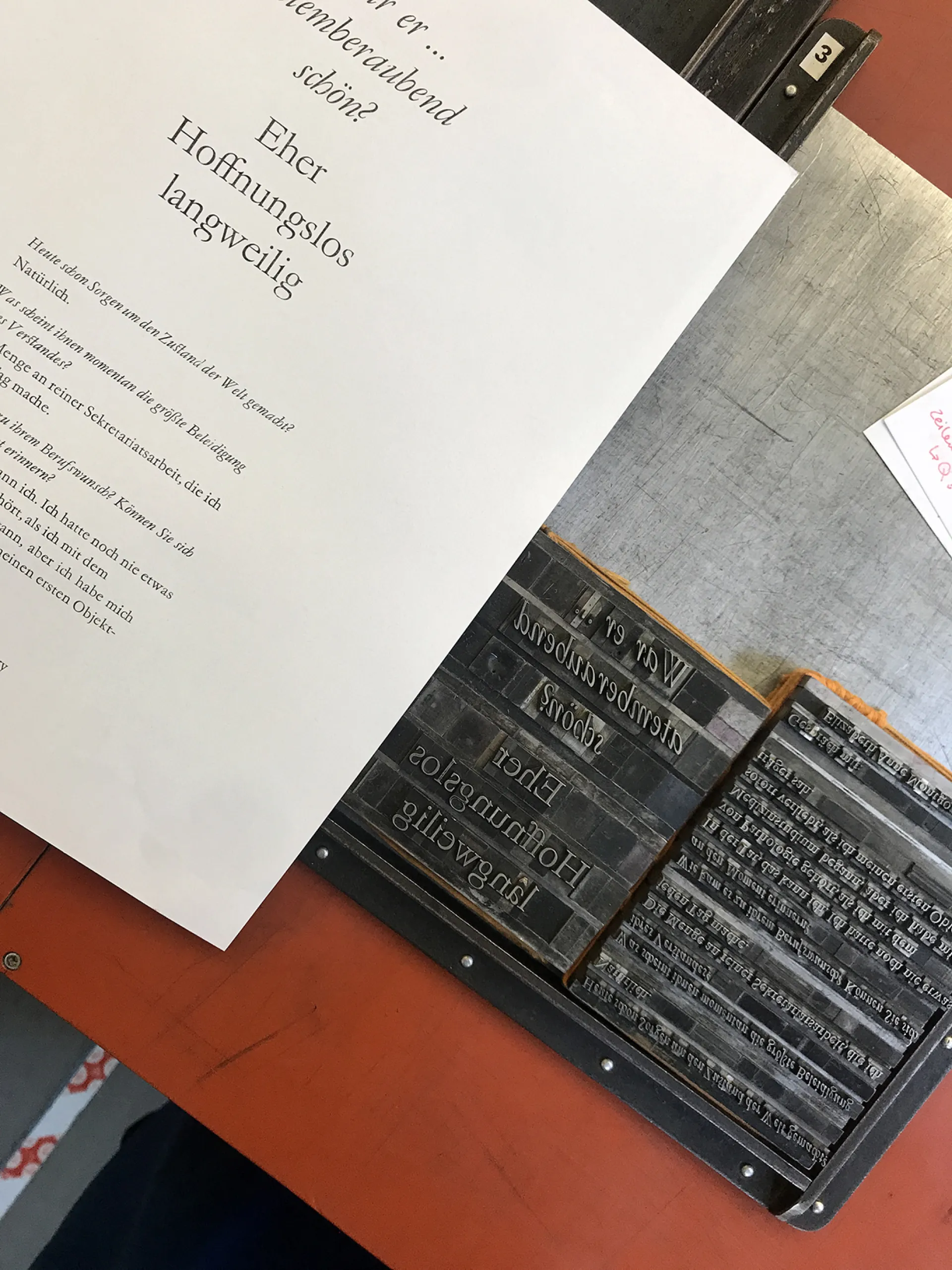
While working on her novel GRM, Sybille Berg spent two years talking to experts from a wide range of disciplines – systems biologists, neuropsychologists, cognitive scientists, marine ecologists, conflict and violence researchers. About the state of affairs in their fields, and about ideas for a future that doesn’t look like a nightmare. [From: Sybille Berg: Nerds retten die Welt (Nerds Save the World). Conversations with those who know. Kiepenheuer & Witsch, Cologne, 2020]
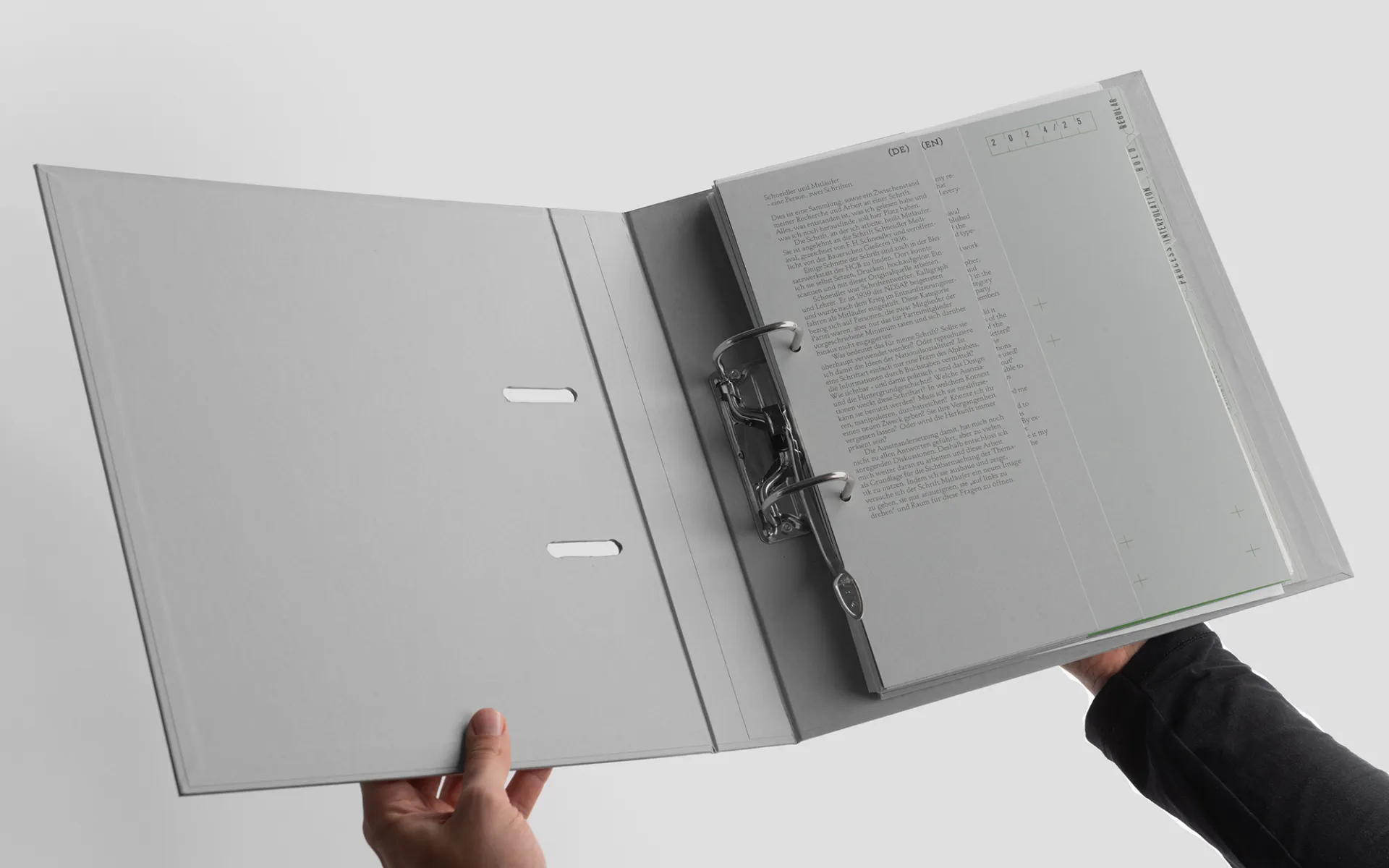
The interviews from Nerds retten die Welt are the starting point for a typographical and design implementation in the courses Typography and manual typesetting, as well as Desktop Publishing. The work in letterpress was linked to Robert Schmiedel’s workshop etching with students of the 2nd year of Buchkunst/Grafik design, who printed illustrations to accompany the interviews.
How is the history of graphic design told, and whose voices become visible? Drawing on quotations from four texts — Once Upon a Time (Sara Kaaman, 2020); Messy History vs. Neat History (Martha Scotford, 1994); Can We Teach Graphic Design History Without Chronology? (Aggie Toppins, 2020) and The Carrier Bag Theory of Fiction (Ursula K. Le Guin, 1989), first-year book arts and graphic design students developed posters that challenge traditional approaches to historical narration and the formation of canons.The quotations were set using rub-down lettering, such as Letraset or Typofix. From the 1960s onwards, rub-down letters made type accessible to the general public for the first time, as individual characters could be selected, transferred and combined independently of professional typesetting. The posters were initially designed at stamp size, then scanned and enlarged for printing.
With works by Chasper Altmann, Marie Baumann, Jannis Bletsos, Jannes Elkner, Valentina Friederichs, Rosa Jakobi, Florence Kallenborn, Constantin Krueger, Elias Lange, Charlotte Lotter, Moritz Nierste, Luise Radig, Olena Sabadakh, Lars Benjamin Schmitz, Pavlína Smekalová, Emma Toennessen, Jianing Xu, Alina Yakovenko
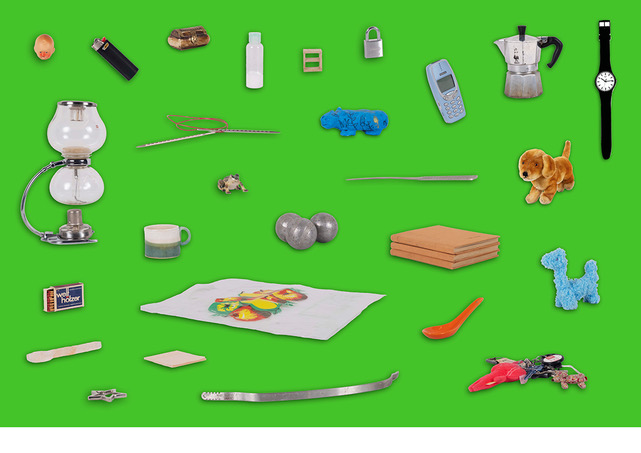
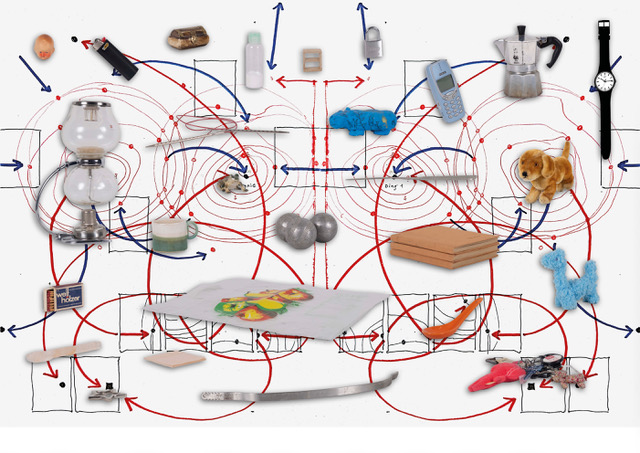
good things are worth waiting for [haste makes waste] – the state of affairs = the initiating situ~ation, case scenario(s)
The state of affairs* shows [2] things as a starting point for inter~pretation* and questions [the] things in the context of being applied – in terms of appearance and function, form and history, handling and materiality, (in)utility and use, and the potential to essentially be the starting point of a narrative* again.*[typo]graphic praxis = practice + reflection
Räume / spaces:
[ in situ ] 1.30 und Flurbereich
[ remote ] GRASSI Museum für angewandte Kunst, Foyer 1.OG
[ online ] outputin.de
Bosch, Fritzi mit: Notizbuch; Plüschdino, blau
Daferner, Johanna mit: Etui; Sternkarabiner
Dahlke, Coco mit: Tasse; Syphon Kaffeebereiter
Goerner, Hannes mit: Schlüsselbundring; Schlüsselbundanhänger
Graf, Luisa mit: Haftnotiz; Thorax-Bügel
Gröper, Henriette mit; Boule Kugeln; (Plastik-)Tragetasche
van Handel, Mimi mit: Nilpferd, getont; Stricknadeln)
Lindenberg, Diva mit: Zahluhr; Wanduhr
Olarescu, Anita mit: Behälter (no name); Ohrringe
Rühl, Hannes mit: Feuerzeug; Babykopf
Sander, Ricardo mit: Bialetti; Nokia
Van Volxem, Anton mit: Schloss, Regal
Wendland, Samuel mit: Gabel (aus Salz); Streichhölzer
Willsch, Winni mit: Kaffeelöffel; Tagebücher (1957)
Winkler, Kyra mit: Brieföffner; Stofftier (Hund)
With “(ge)schichten — mehrfach spürbar” we explore the presence and absence of thoughts, memories, and notions of the future.
What remains visible, what disappears?
Does something disappear because it is no longer visible?
What happens when the old is overwritten by the new?
We invite you to join us in observing the emergence of a changing image.
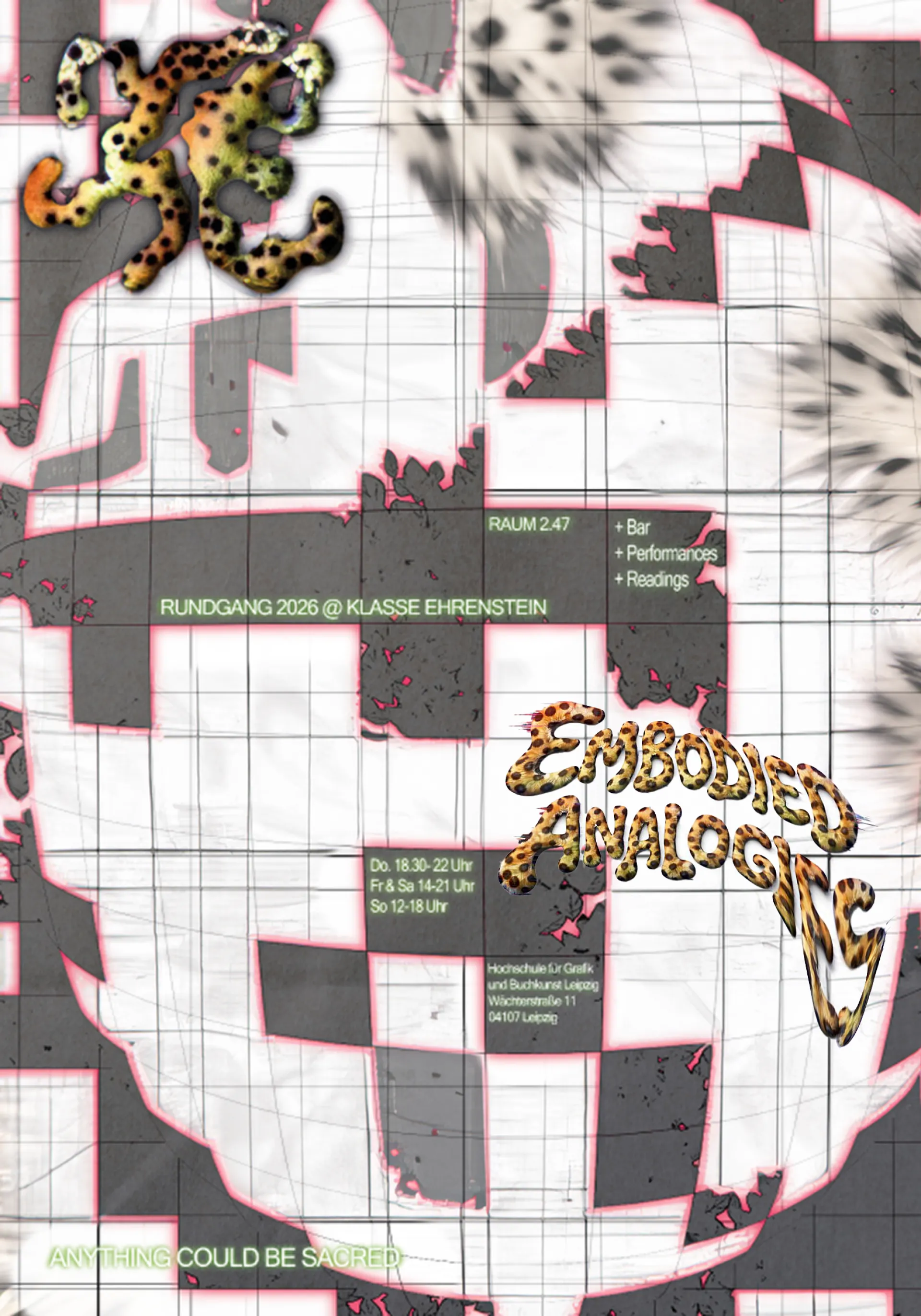
Embodied Analogies unfolds as a constellation of works that understand the archive not as a storage of the past, but as a living, breathing body. Here, memory is not fixed; it is baked, performed, scanned, dressed, coded, fermented, and re-enacted.
The students of Klasse Ehrenstein treat history as something wet, unstable, and relational: an alive-archive that circulates through friendship, ritual, pop culture, fiction, and care. Instead of starting with a theme, Embodied Analogies was shaped through a relational group curatorial process that let meaning emerge between works.
Across the exhibition, bodies emerge as interfaces. They are technical and posthuman, ritualistic and vulnerable, playful and resistant. Dresses become performances, umbilical cords become borders, ball pools become somatic memory, QR codes become seductive portals. The body is not a subject to be represented, but a medium through which data, emotion, ecology, and politics are processed.
Time, in Embodied Analogies, is queer. It is geological, glitchy, cyclical, and mythological rather than linear. Intimacy is never confessional; it is mediated through objects, archives, rituals, algorithms, friendships and it is carrying an insistence on justice and a refusal of the violences that shape whose lives are allowed to matter.
What connects these works is not sameness, but a shared commitment to worlding: to inventing aesthetic forms that hold complexity, contradiction, and tenderness at once.
With Contributions from Genesis Kahveci Charlie Breisig (Jungfrau) Max Grund Sarah Letalik Luki Haak Viyan Kalayci Toto wolsky Nikita Serebriakov Liva Voigt Jonna Baumann Irem Özkürkcü Genesis Kahveci klara stangl Okezi Iteire Raga Rahman Florence Kallenborn Leif Klinger Nadine Aber Elina Averbukh Lis Schmidt
The starting point for the works on display is the three-day workshop “Recollecting Futures” with artist Vanessa Opoku. During the workshop, participants spent two days exploring the Botanical Garden of the City of Leipzig and discussing how this institution organizes and narrates. Botanical gardens collect, exhibit, and serve narratives—just like museums, and just like we do as artists. They tell stories with what and how they collect, organize, and display. But who decides what is collected? Whose stories are told? The technologies we use—cameras, scanners, digital archives—were often developed for surveillance and control. How can we reinterpret these tools and use them for other narratives? What does collecting mean in times of collapse, crisis, and regeneration? What stories can we tell that do not reinforce existing power dynamics, but speak of and explore other futures?
With works by Toto Wolsky, Fine Schröter, Jule Ehlenz, Mascha Breuer, Sarah Crameri, Lea Petry, Carla Maruscha Fellenz, Zina Bluhm, Shary Talebian, Haru Li Wdo, Nadine Aber, klara stangl, Sophie George, Dimitrios Mavroudis, Sally Alhindawi
… a warm lunch … snacks … a coffee … a place to make coffee or tea … a kitchen … a place to lie down … a cozy atmosphere … a productive atmosphere … a book shelf … plants … a carpet … different light sources (f.e. floor lamp) … a space where everyone feels responsible for its cleanliness & tidyness … shelfs that provide organized storage… … a classroom with good acoustics …walls that are not white …
The classrooms at the HGB serve a variety of functions. They are exhibition spaces, rooms for class meetings, break rooms, storage rooms, studios, rooms for exams, small meetings, and work discussions. The rarely achieved ideal state is the white, empty room—a state that repeatedly poses challenges for many other activities in the room. This semester, we have begun to adapt the space to our learning needs. On the tour, we show the work in progress, a process that we may never complete, but which we are undertaking in order to reflect on how contemporary teaching and the associated transfer of knowledge can be conceived, implemented, and lived in a 200-year-old building.
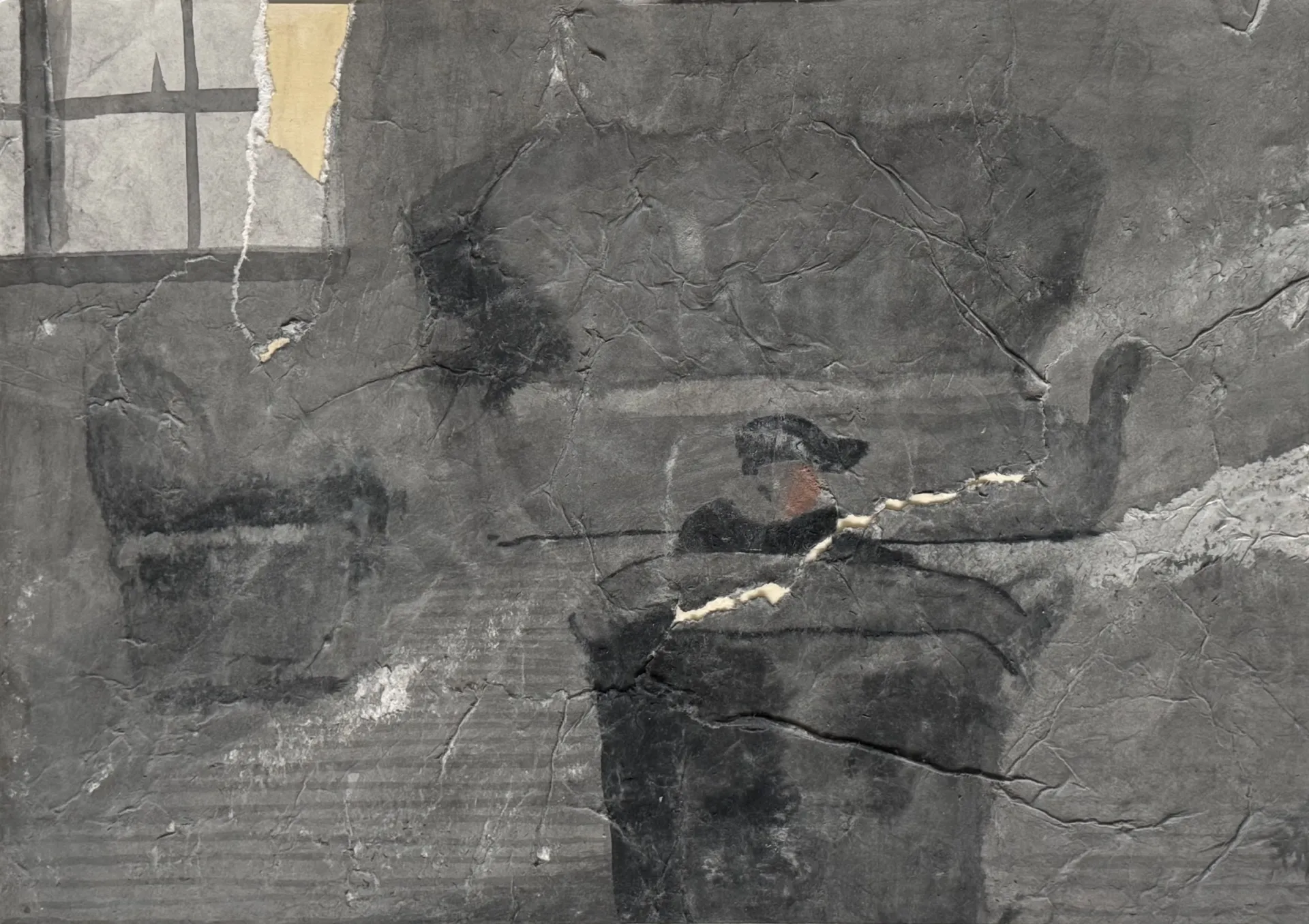
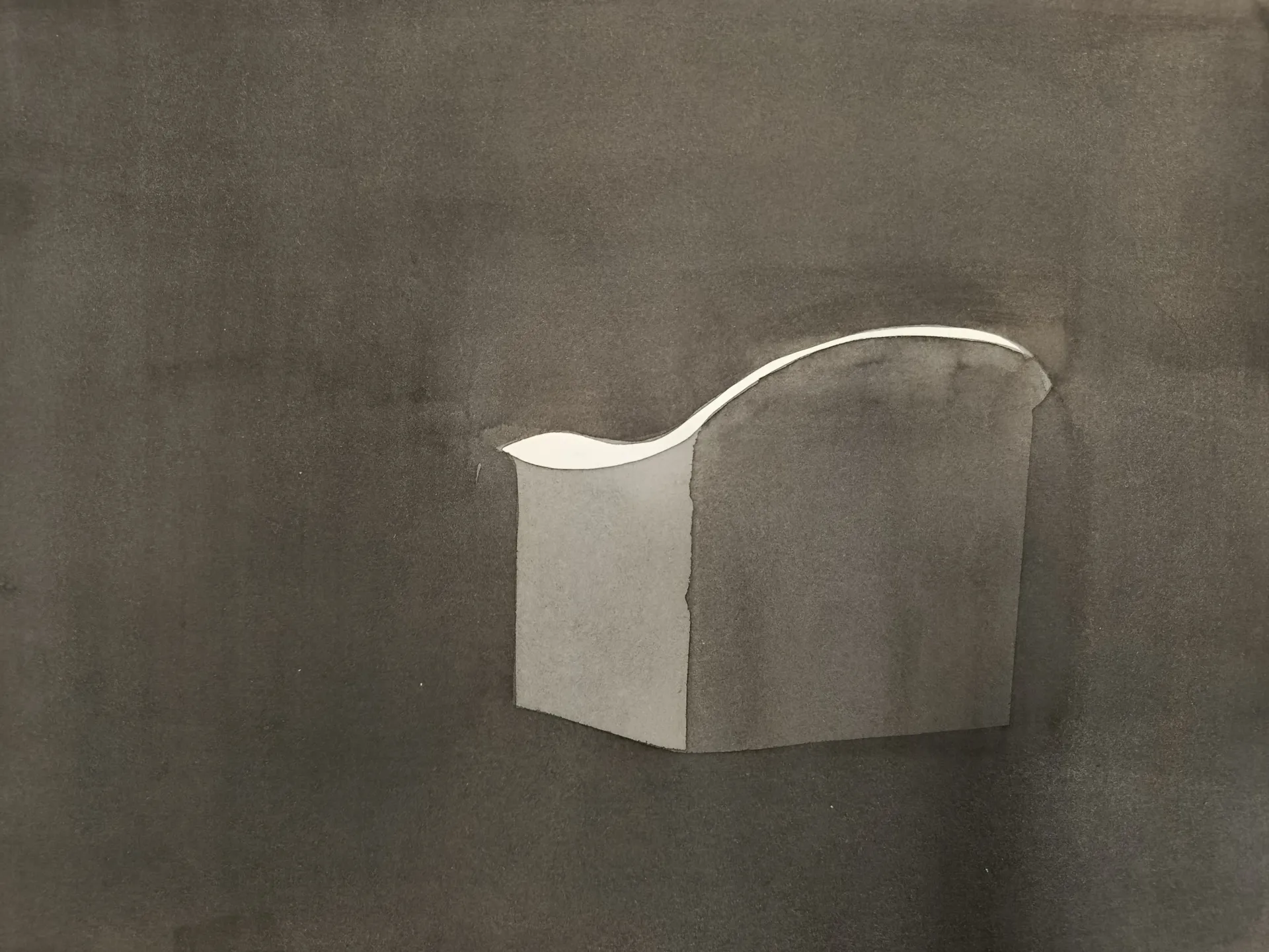
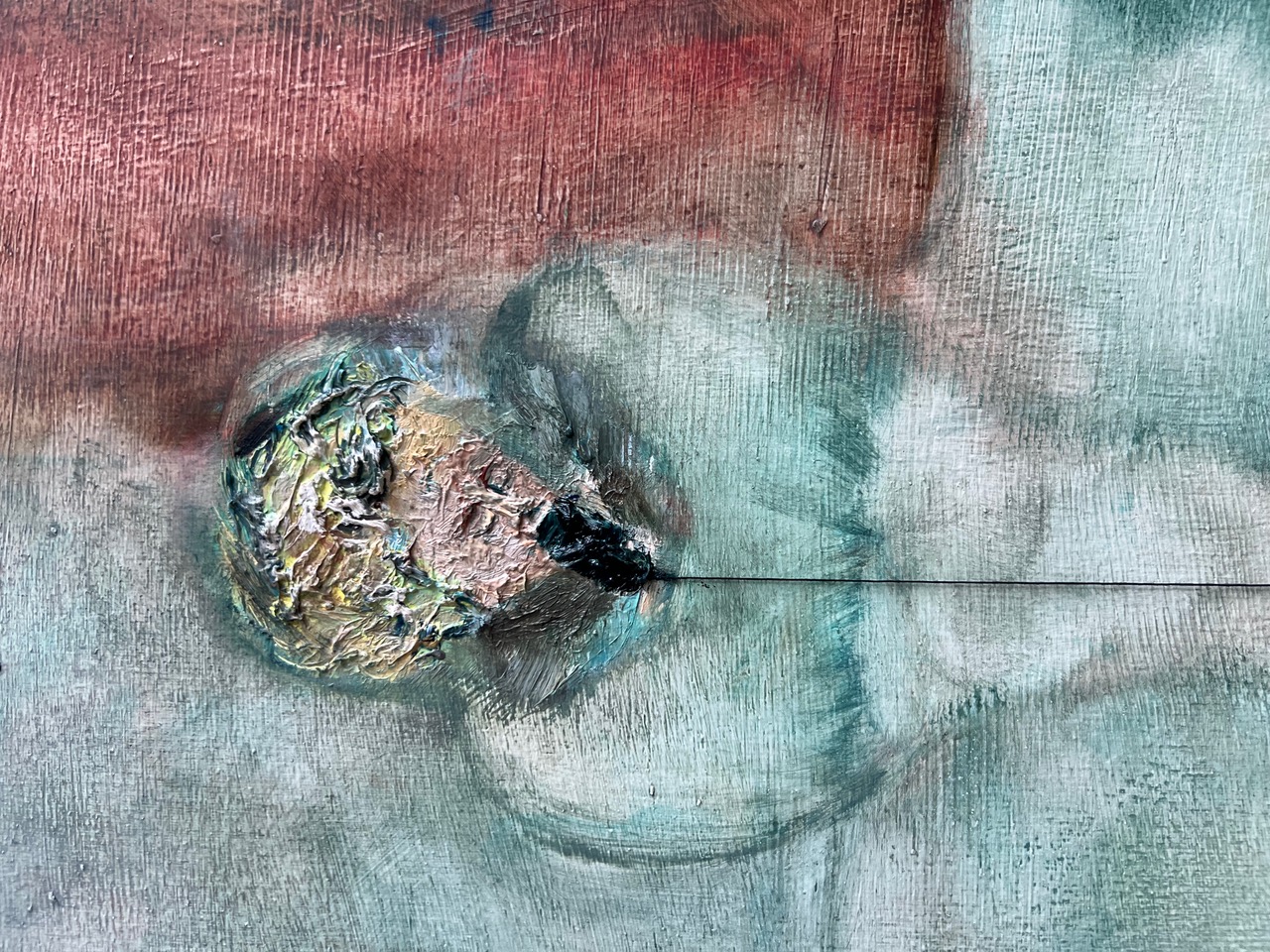
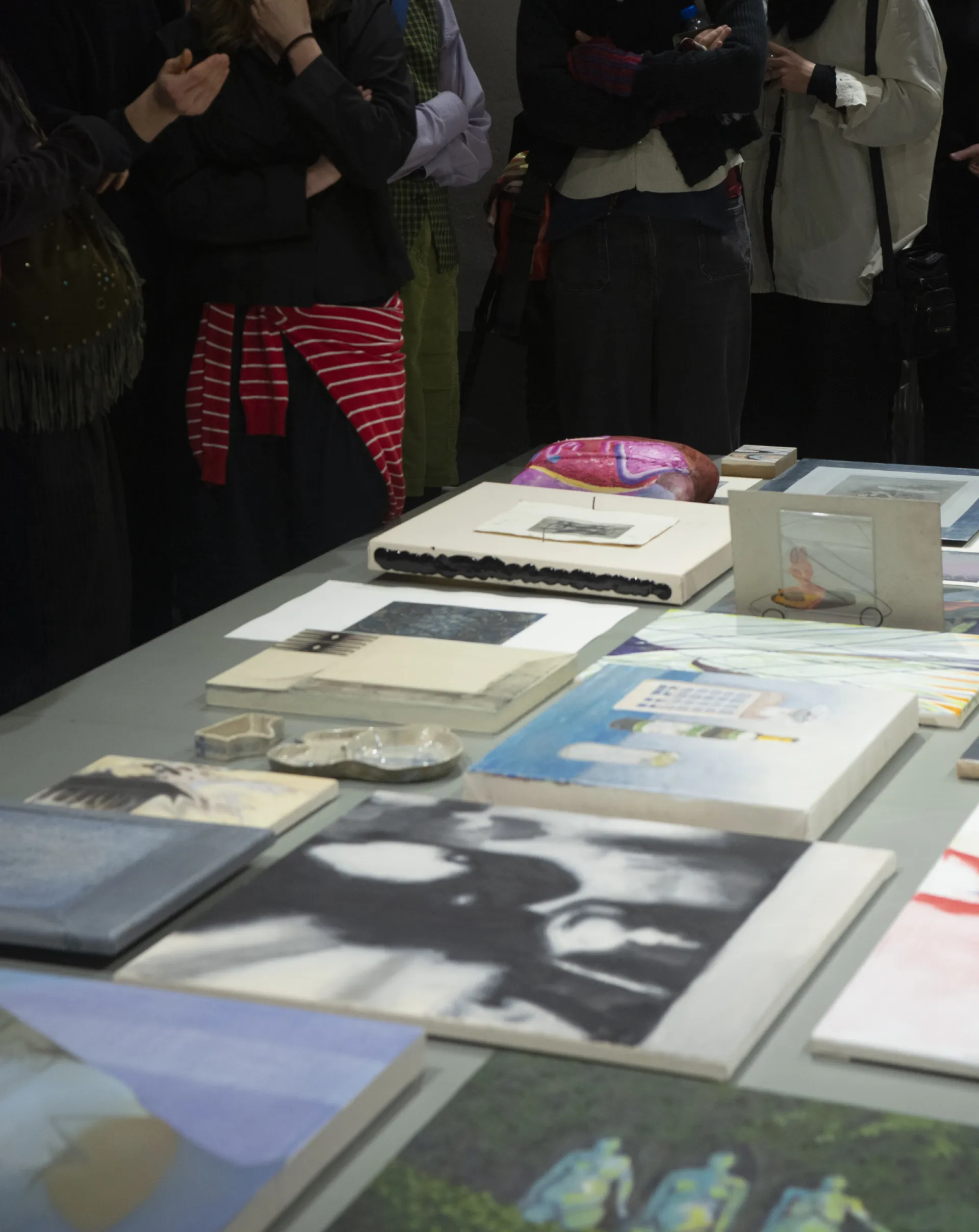
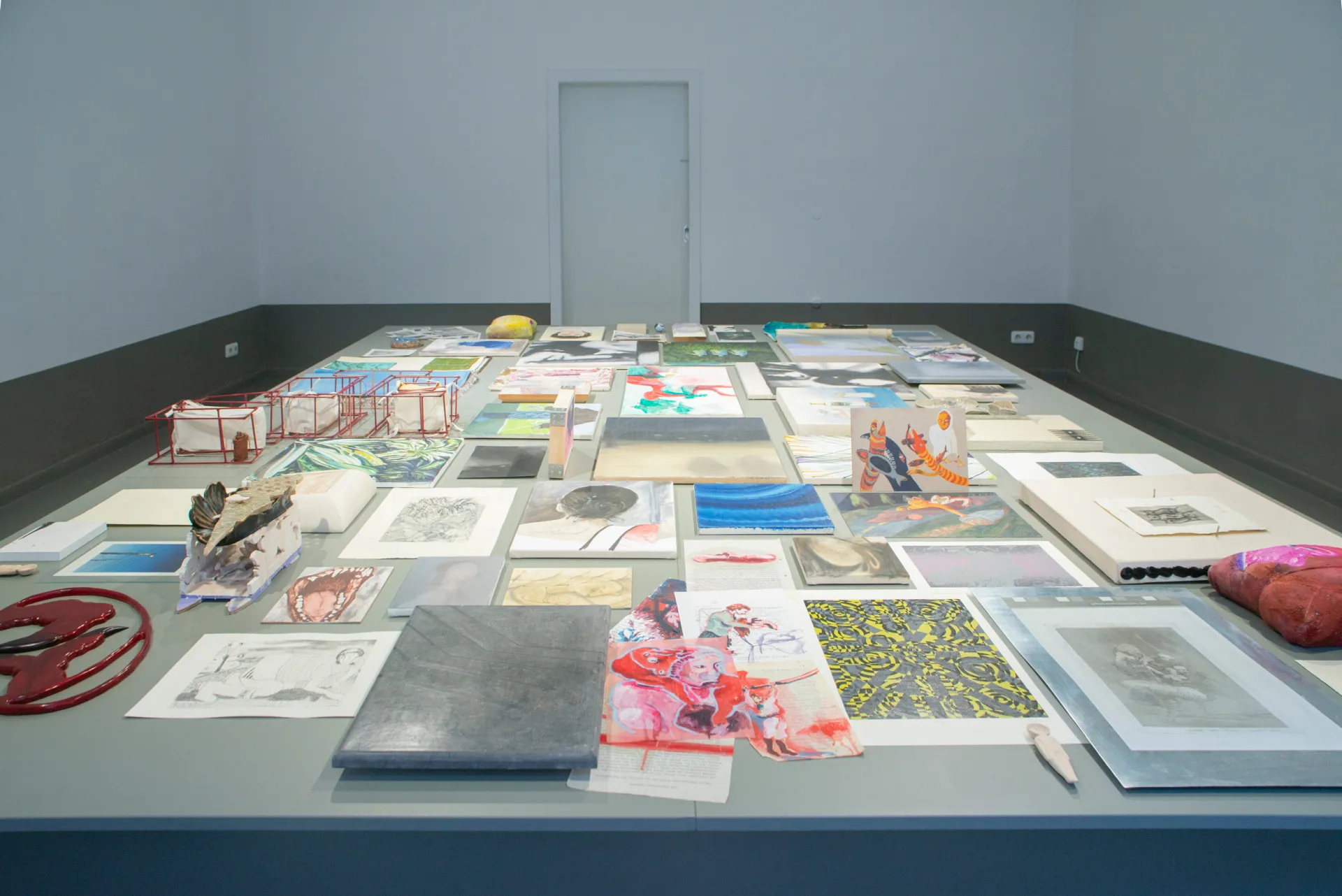
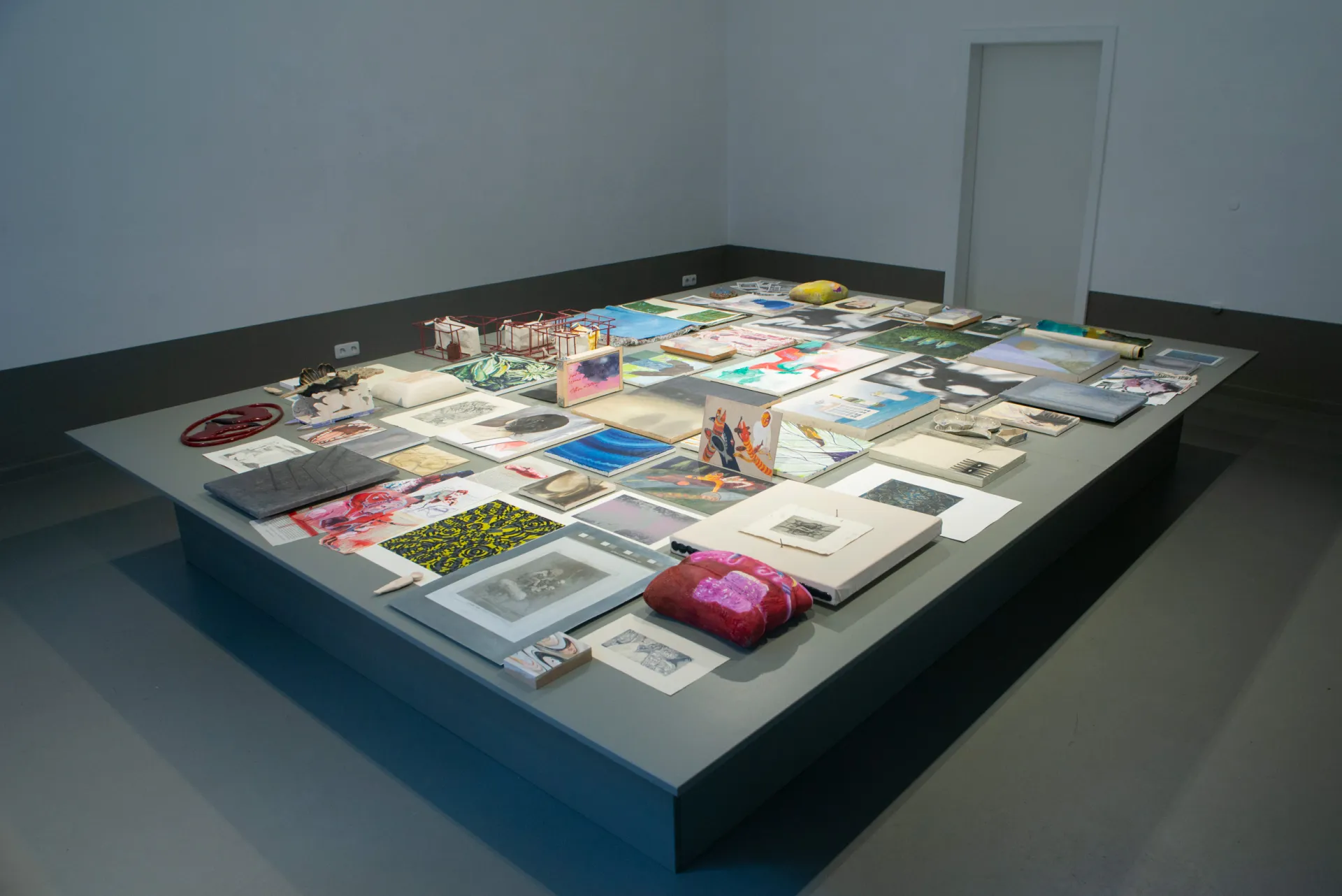
A material mass that expands, resists and grows. The images emerge from repeated interventions within existing states and from an ongoing engagement with what is already visible. Layering, revisions and experimenting with materials allow painting, printmaking and drawing to be explored as open, experienced-based processes.
Every painting I've done has like 100 paintings under it. – Amy Sillman
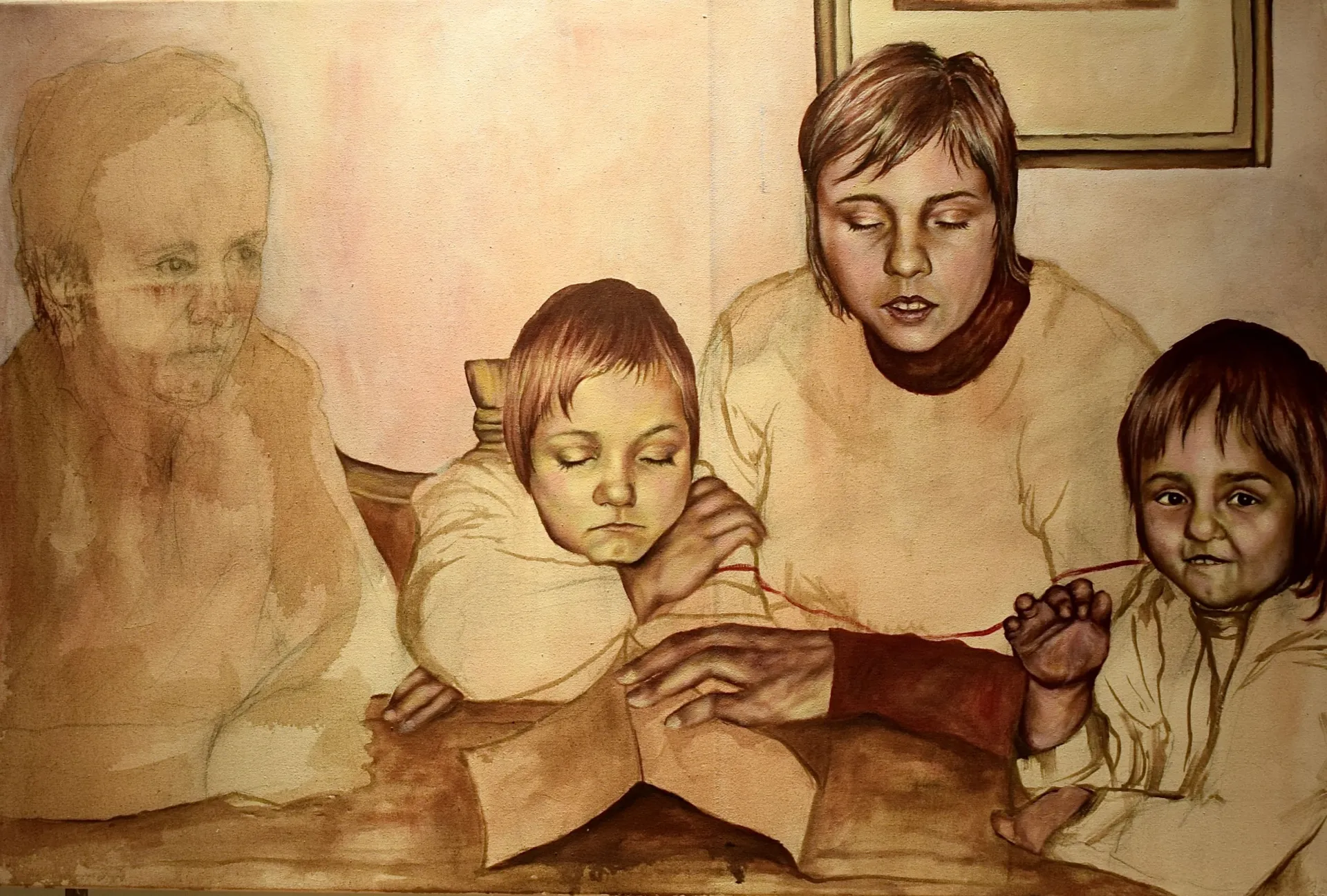
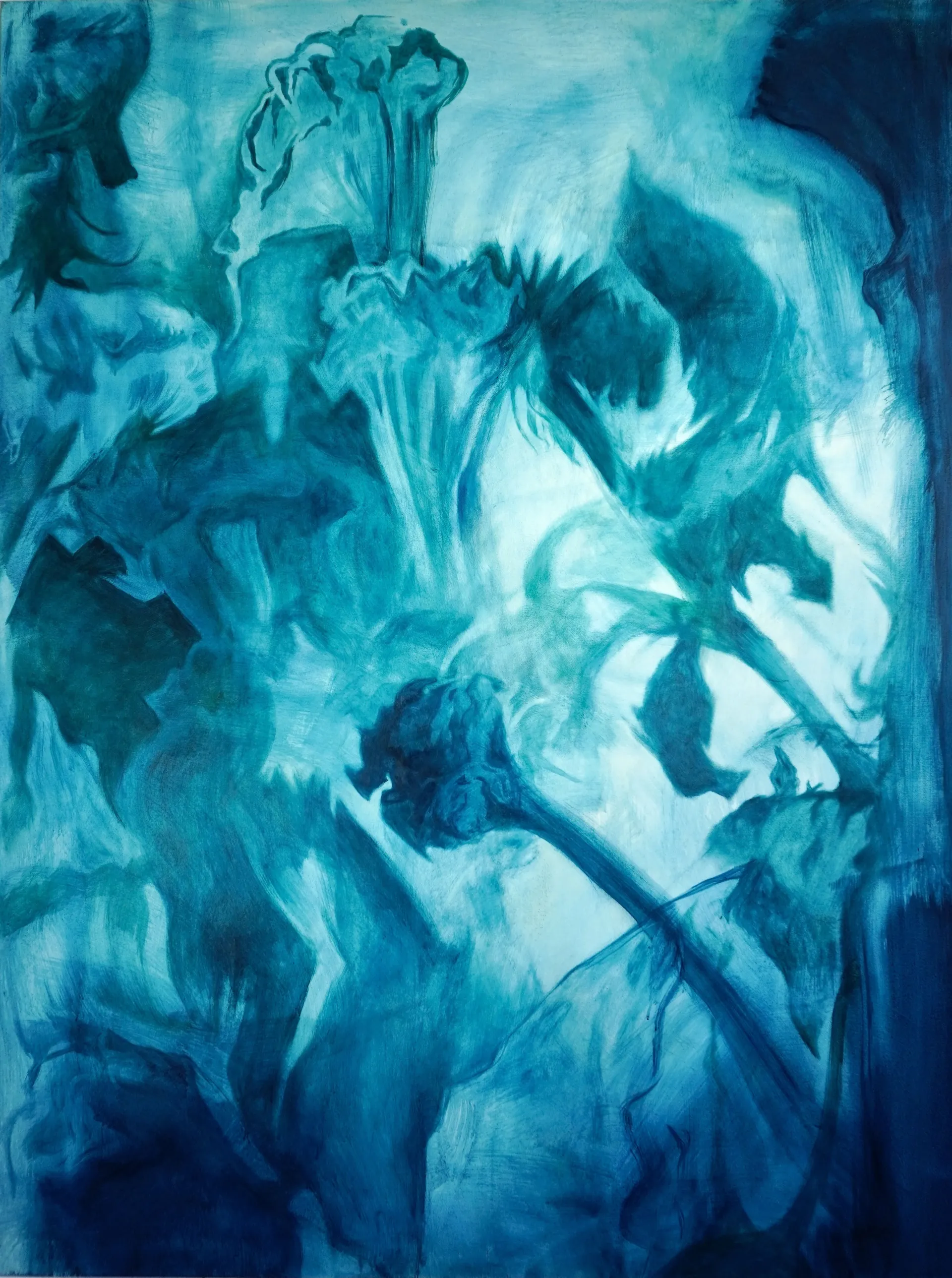
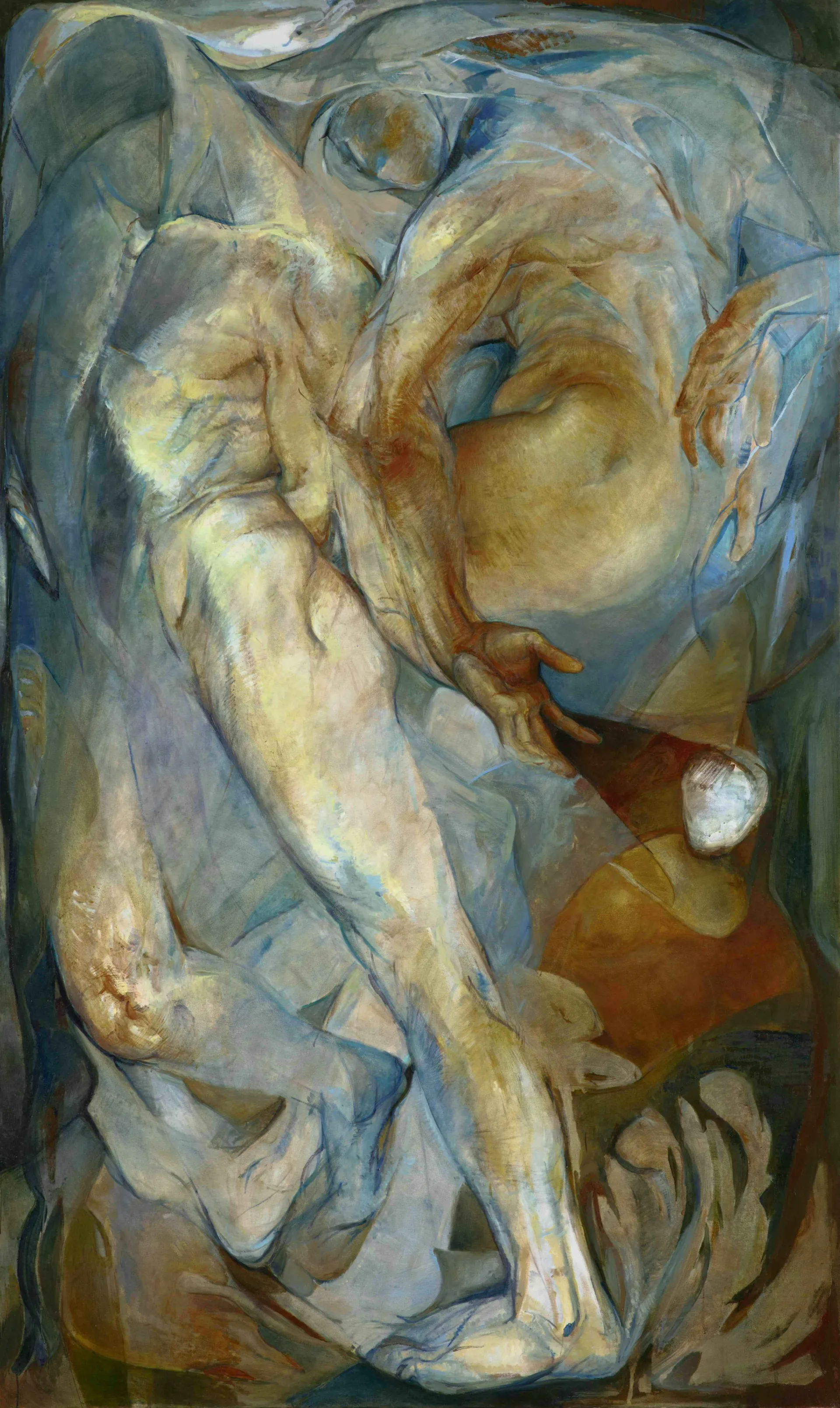
The game starts right on time at 6:30 p.m. on Thursday in room 3.20. If you have forgotten your gym bag, please report to room 3.40. The lines outline the playing field. We play together and do not aim for the head. Water bottles can be refilled at the bar. If anything is unclear, the coaches are available on site. No one climbs on the stack of mats.
This is where we got lucky!
This is where we play and win!
This is where we are there for each other!
Feat. Staffel Verlag!
Presentation of the original graphic collection PASSAGE, which will be published in 2026 and is the result of a three-day letterpress workshop held by the class last year.
This is where there will also be a café for everyone again.
For this year's tour, Professor Michael Riedel's class is expanding the pictorial space. This is not just a figure of speech, but a 17-meter-long contemporary history painting that the students created in a collaborative painting process in preparation for the tour. The resulting image is capable of defying any resistance.
Can the individual positions of an entire specialist class be brought together pictorially in one painting without losing the overall message? And how can the painting be accommodated in the exhibition rooms when a drywall blocks the way? This year, the class, which has won the tour award several times, is making a major breakthrough!
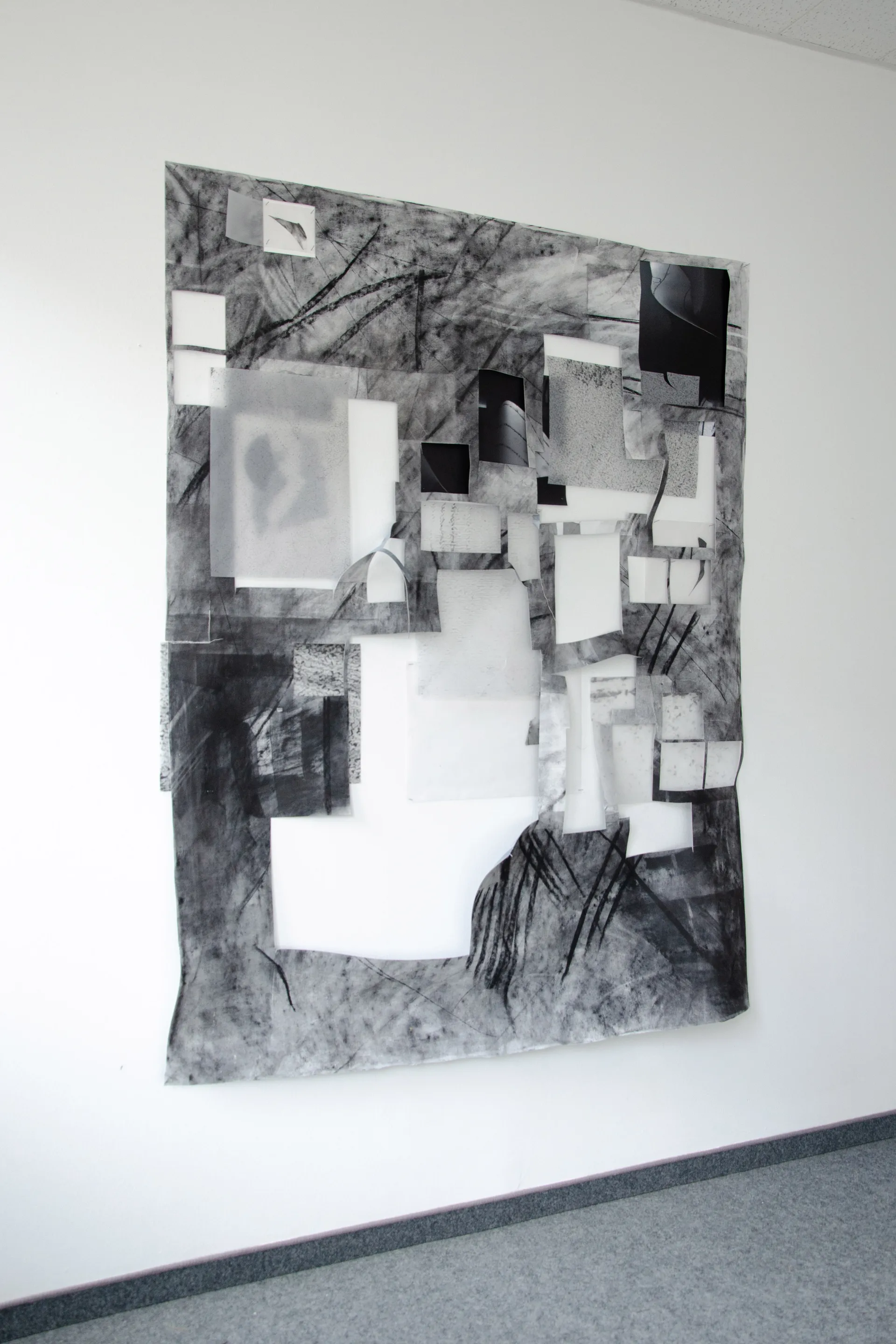
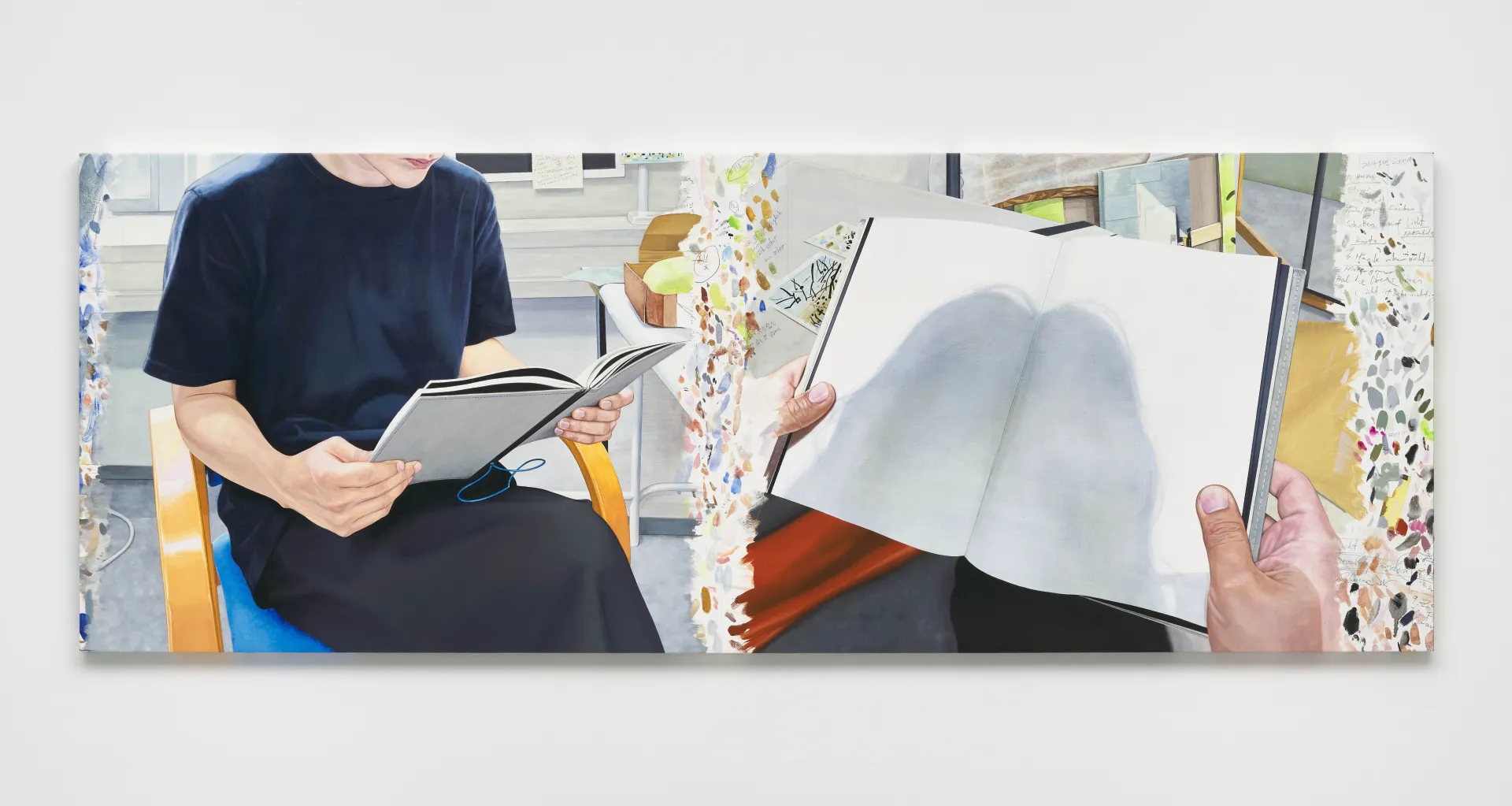
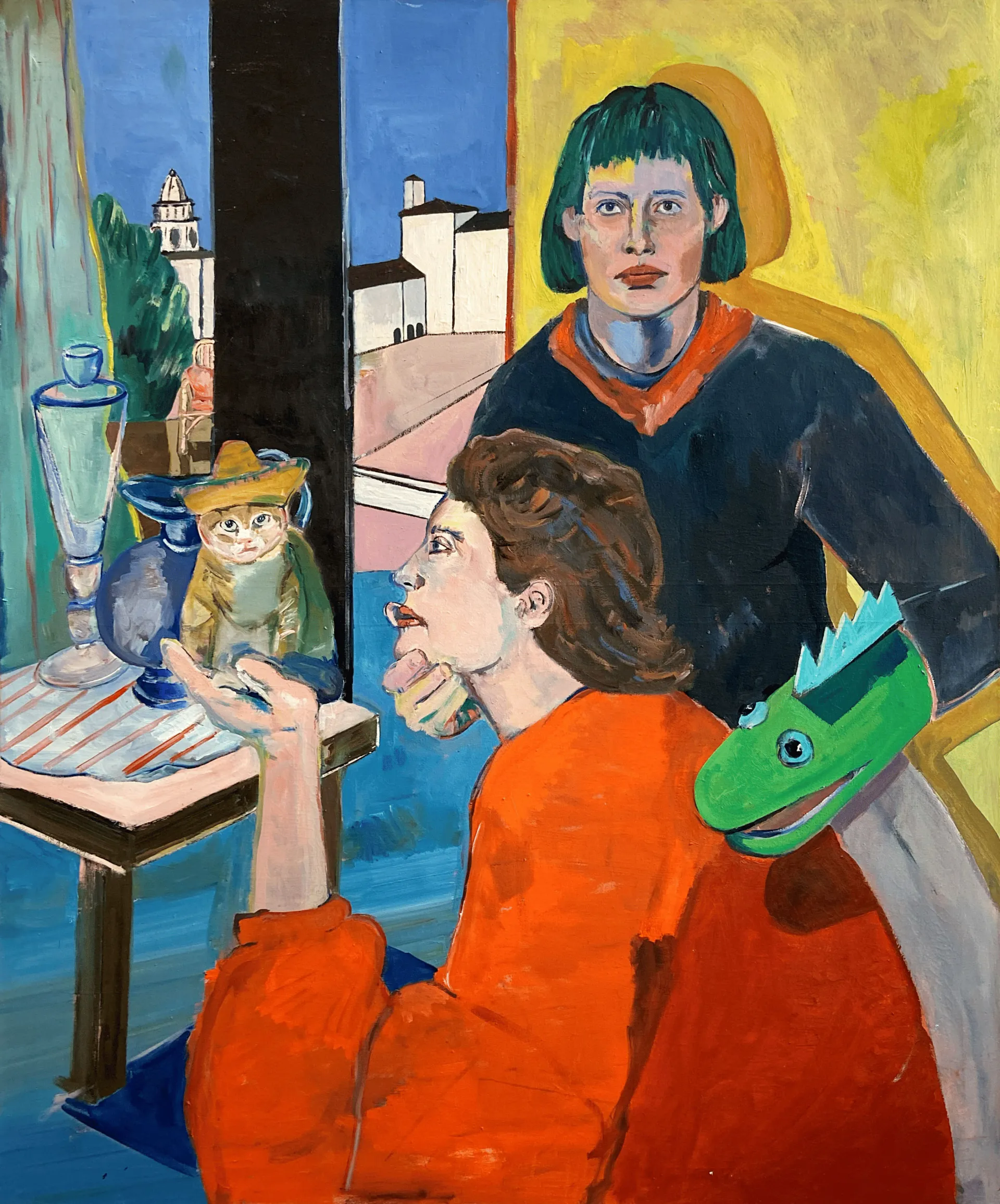
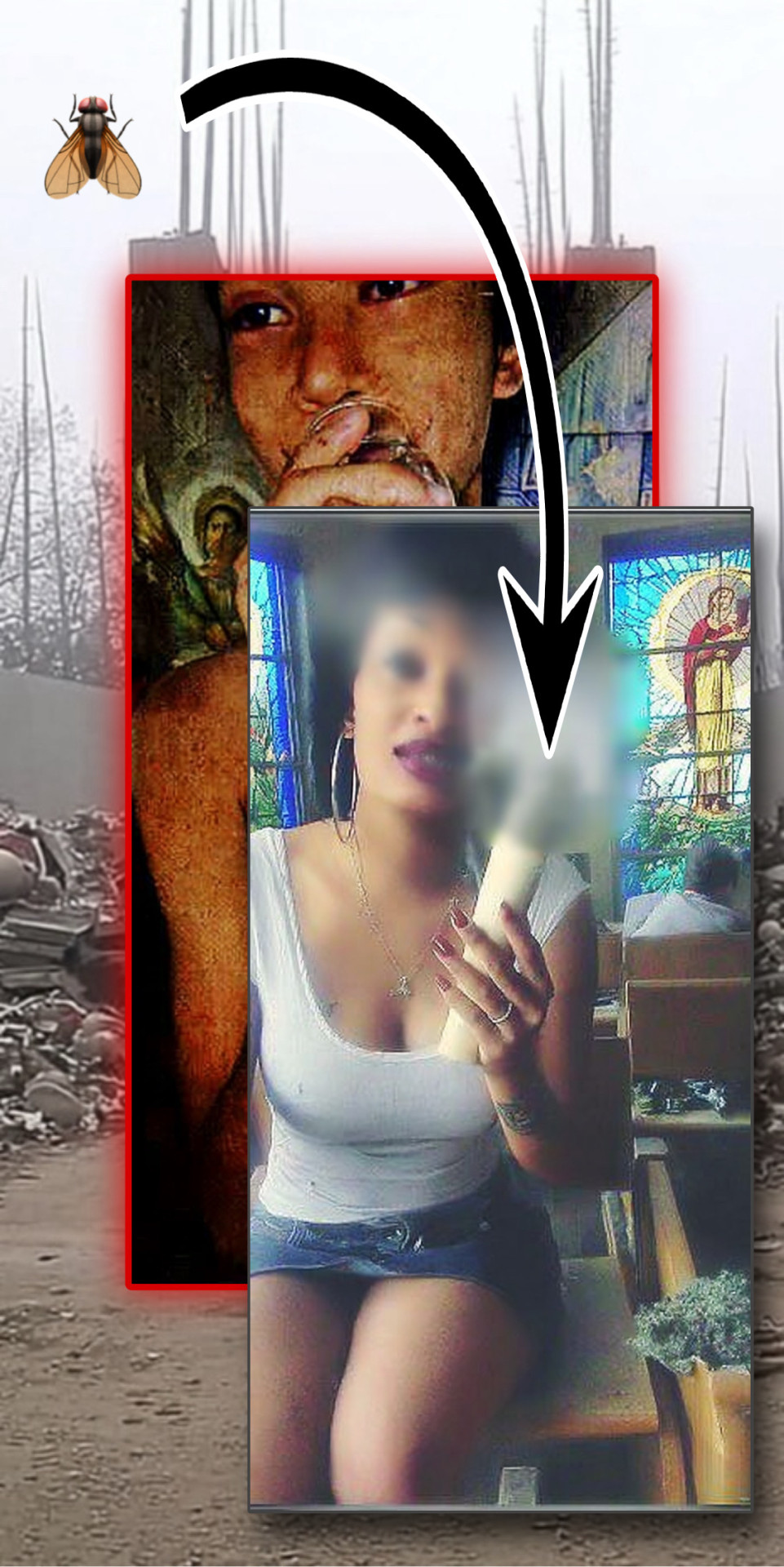
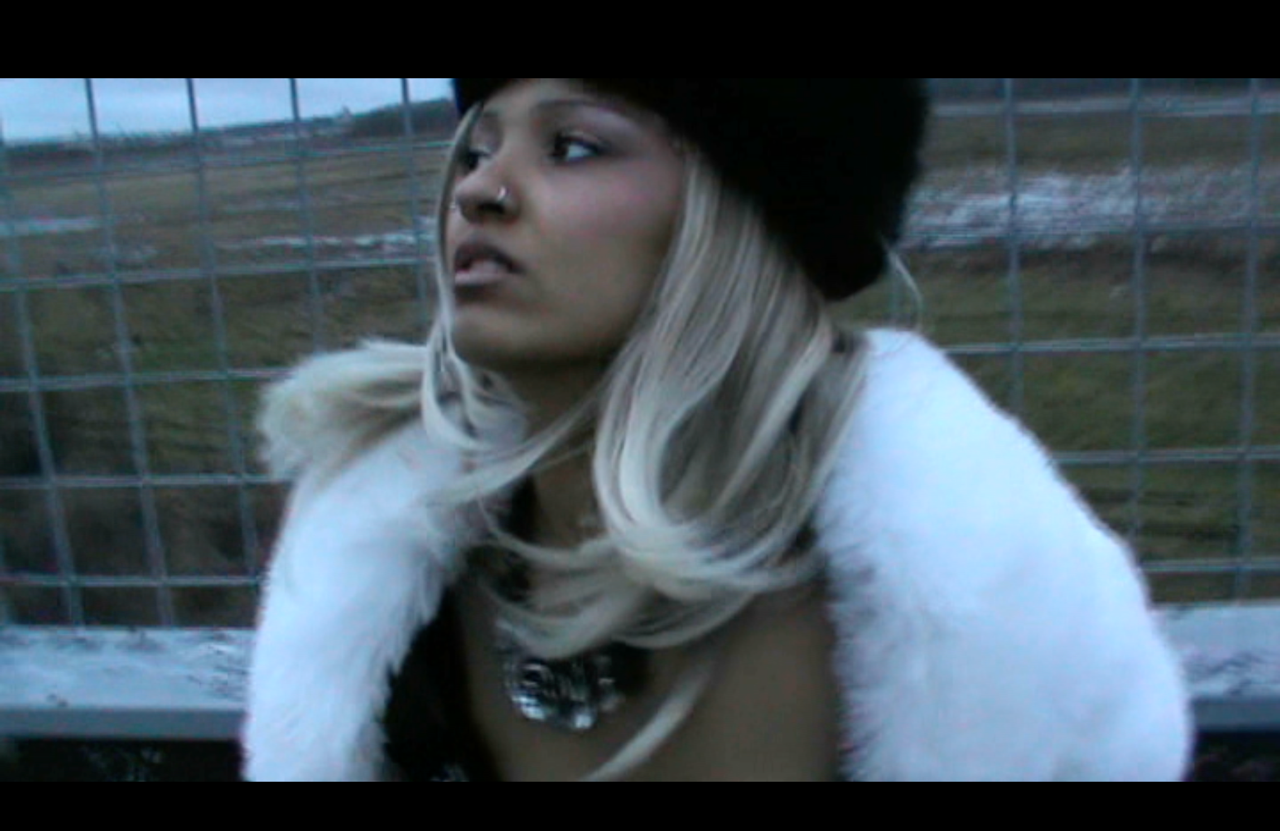
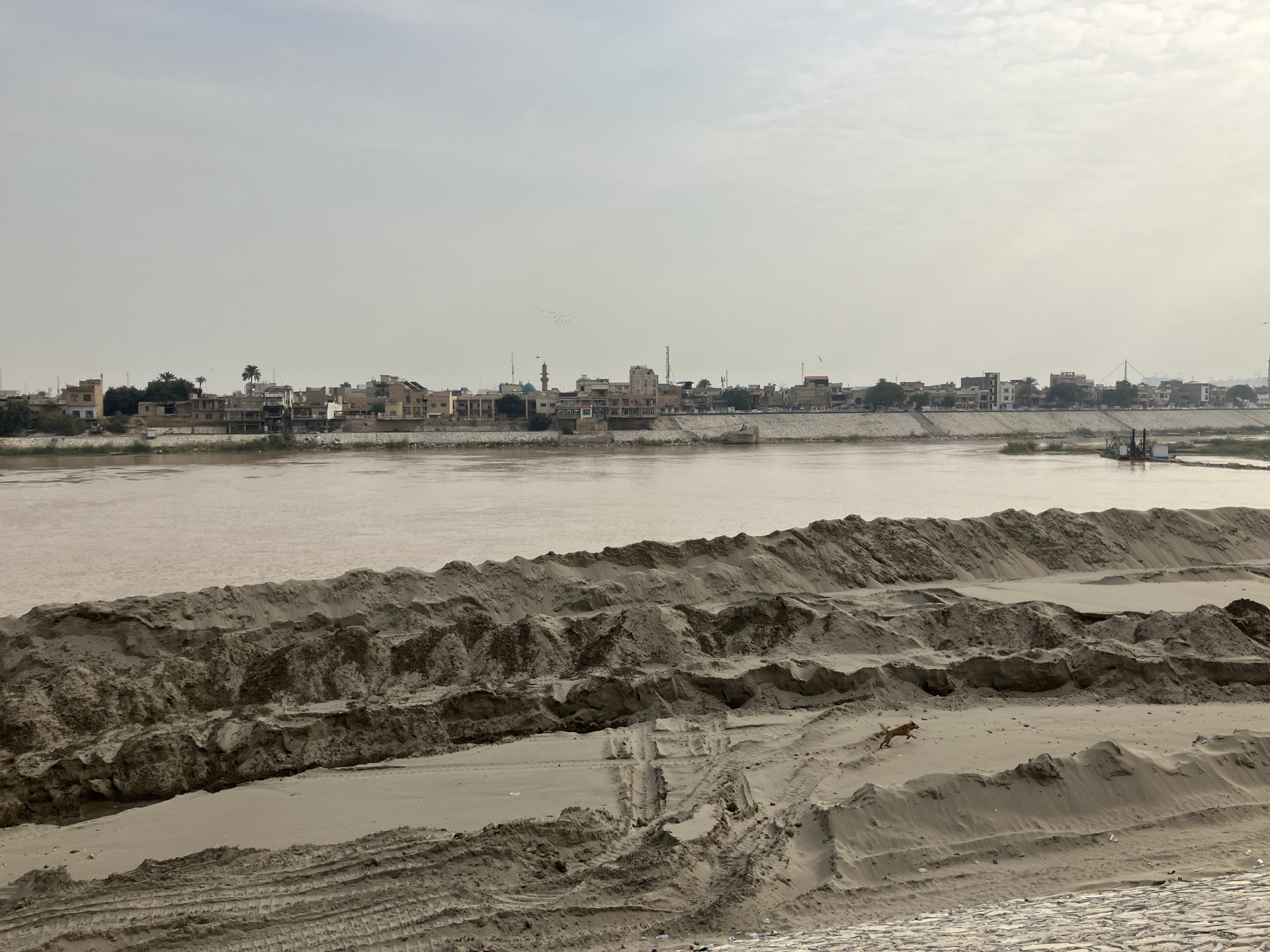
Different senses of time overlap inbetween. Traces left in the making, hesitations, brief pauses
small shifts, are at times concealed within the fabric, at times revealed, and at times allowed to hide themselves.
For this year’s Rundgang, the 2nd year Media Art students present a collaborative work on fabric.
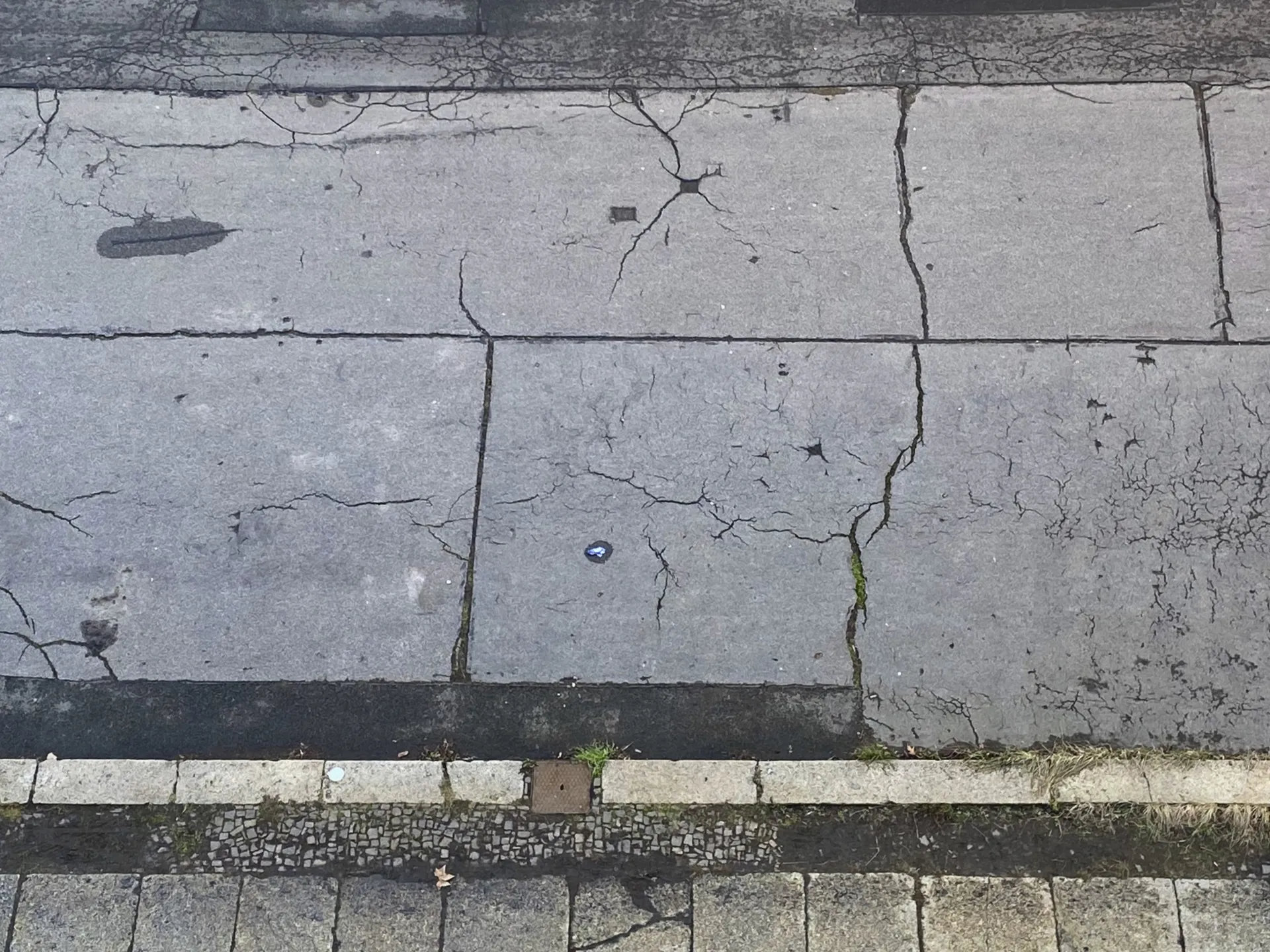
Im Spiegel: Visuelle Kultur, Bildkunst, Lichthof, White Cube, Europa
Den Hörsinn umgibt die Aura des Anderen, Untergeordneten, Übersehenen
light shift
night view
Schwerkraft
eine Gruppe sucht sich zusammen, sucht das Einzelne, kommt zusammen, vereinzelt sich, sucht zusammen
bis plötzlich etwas anderes passiert
(live)On air and the ground
das Körperliche zwischen uns spricht
}}}}}fade{{{{{
news fade
in conversation
it's in the air tonight (live)
Draußen bebt und demonstriert die Zeit
Question & Sound macht Sinn und lärmt
Wie klang seine Stimme?
Expanding sideways
A group is present
hello?
The class for performative arts invites the public into social, physical and sonorous situations - by the fire, in the lift, in the class room. Solo and group performances give insights into the working process of performance as media art and challenge the perception of bodies, space and time. A radio transmission spreads audible traces of live performances on air. Throughout the Rundgang ephemeral performative moments spin a net of encounters that can neither be grasped nor repeated.
Program Schedule, R. 2.08
Thursday, February 12
7:30 p.m. Karaoke
9:30 p.m. Unexpected Services // Heather Koen
Friday, February 13
2:00 p.m. Group Scores // self-organized class project
3:00 p.m. (live) on air // transmission group, Anna Zeit & guests
4:00 p.m. Dinner // Soschka
6:00 p.m. 2 works: Dead Angle (work-in-progress) // Lotta Beckers +++ training unit(y) // Kaya Pilsner
8:00 p.m. Lose enden // DJ set: dots and lines
Saturday, February 14
12:00 place(less)ness / becoming a place // To Fabek
2:00 p.m. Group Scores // self-organized class project
2:30 p.m. Karaoke of Silence // Asya Volodina
3:30 p.m. (Half Dark Half Gold) // Aseem
4:30 p.m. A little demonstration // Andolie Marguerite
5:30 p.m. A Valley By The Red Shore // Heather Koen
6:00 p.m. Fireplace in the courtyard // Frida Schramm
6:00–7:30 p.m. Workshop: Echo West – Choir of Newcomers // Véra Marie Deubner, Luca Diebold
7:30 p.m. Performance: Echo West – Choir of Newcomers // Véra Marie Deubner, Luca Diebold
8:00 p.m. Lose enden // DJ set: Kaya + Soschka
Sunday, February 15
12:00 p.m. Nowness II // Rahel Scharabi
1:00 p.m. GIFT FOR HGB // Frida Schramm
2:00 p.m. Group Scores // self-organized class project
3:00 p.m. 3 works: BÄRformance // Caro Otto +++ hysteric parade // Ziska +++ for arachne // Emma Toschka
5:00 p.m. Enden // Class for Performative Arts
Outside + Ongoing
Ongoing: Elevator Installation Service // Andolie Marguerite
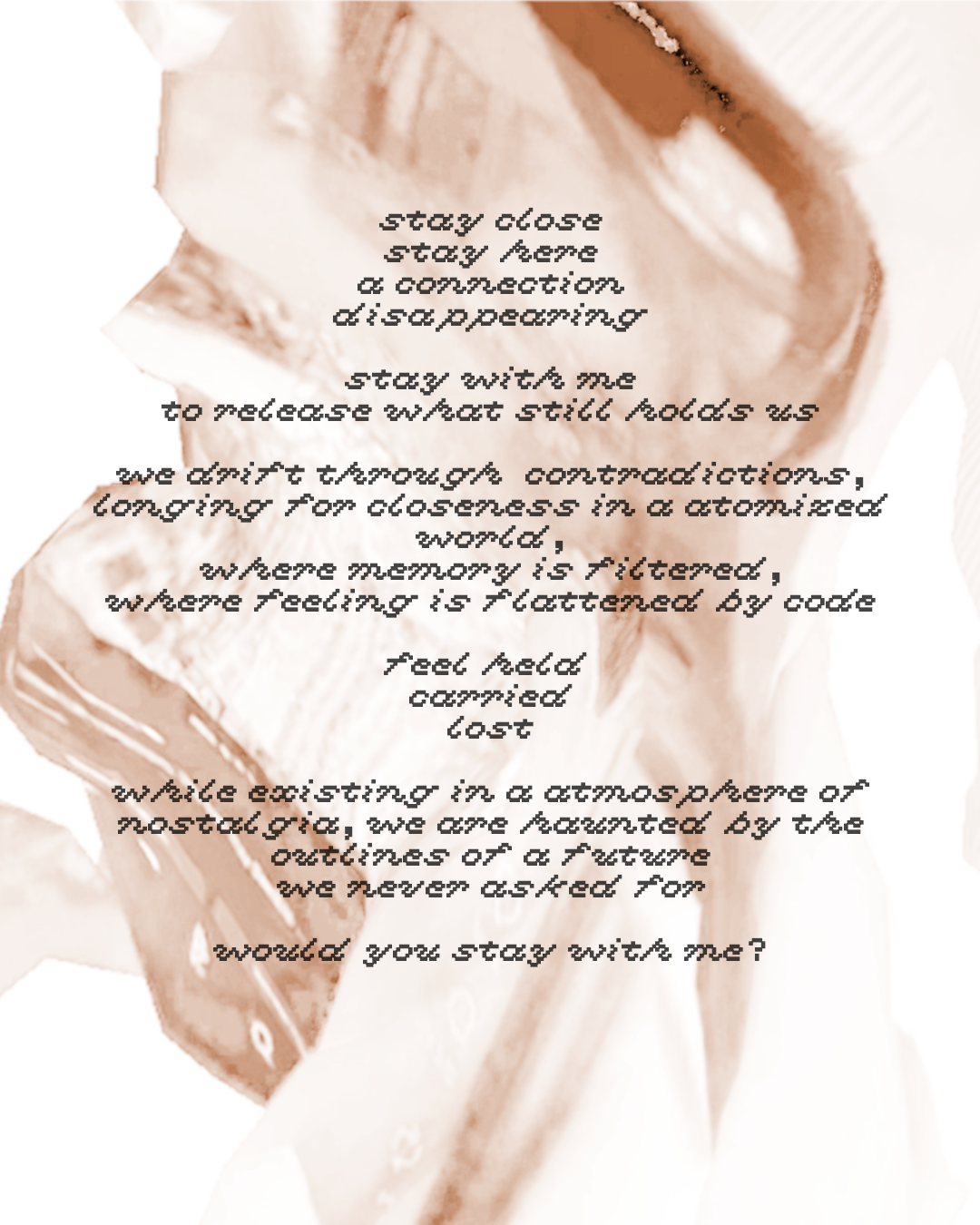
stay here
a connection
disappearing
stay with me
to release what still holds us.
we drift through contradictions,
longing for closeness in an atomized world,
where memory is filtered,
where feeling is flattened by code.
feel held
carried
lost
while existing in an atmosphere of nostalgia, we are haunted by the outlines of a future
we never asked for.
Would you stay with me?
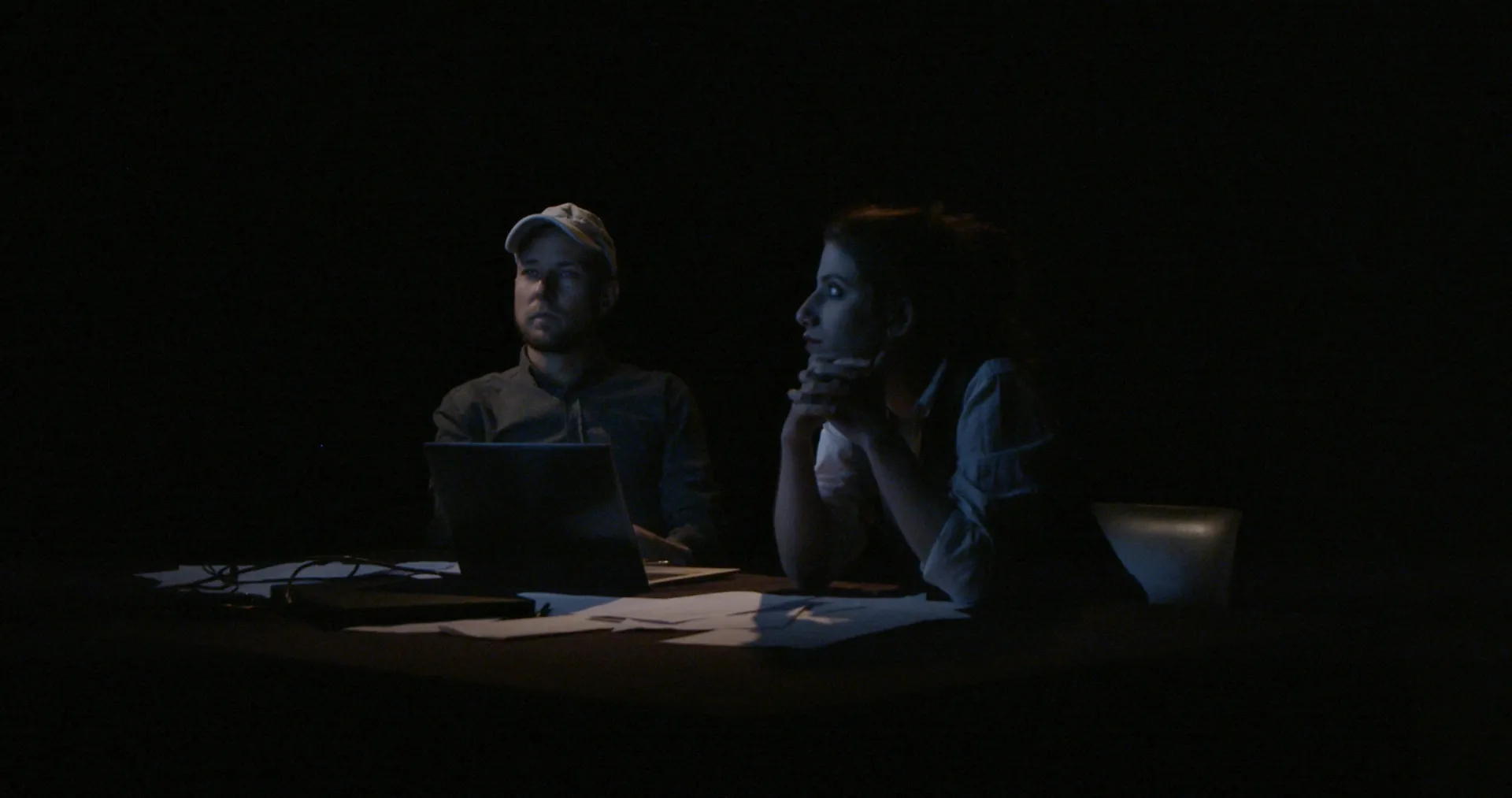
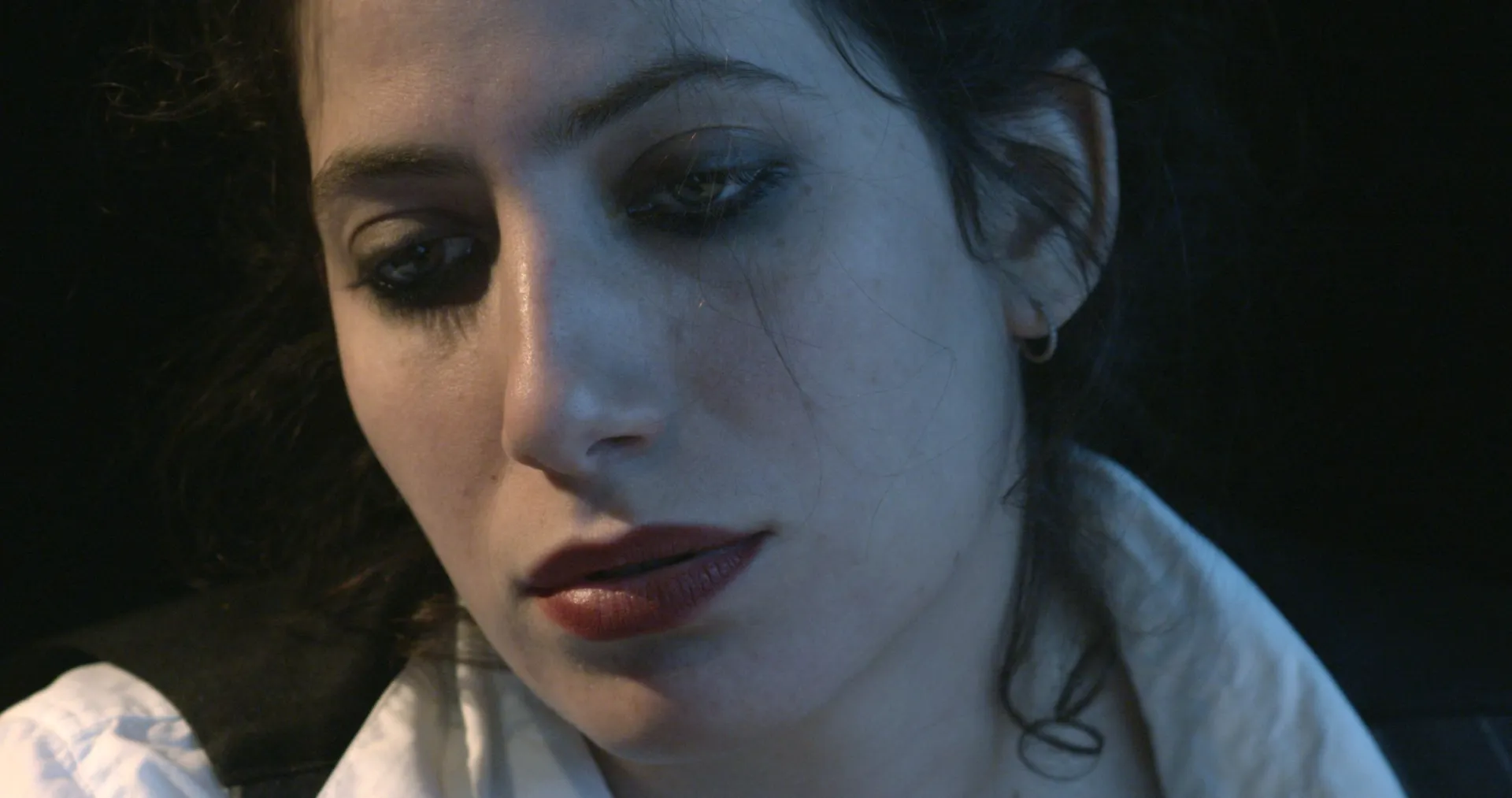
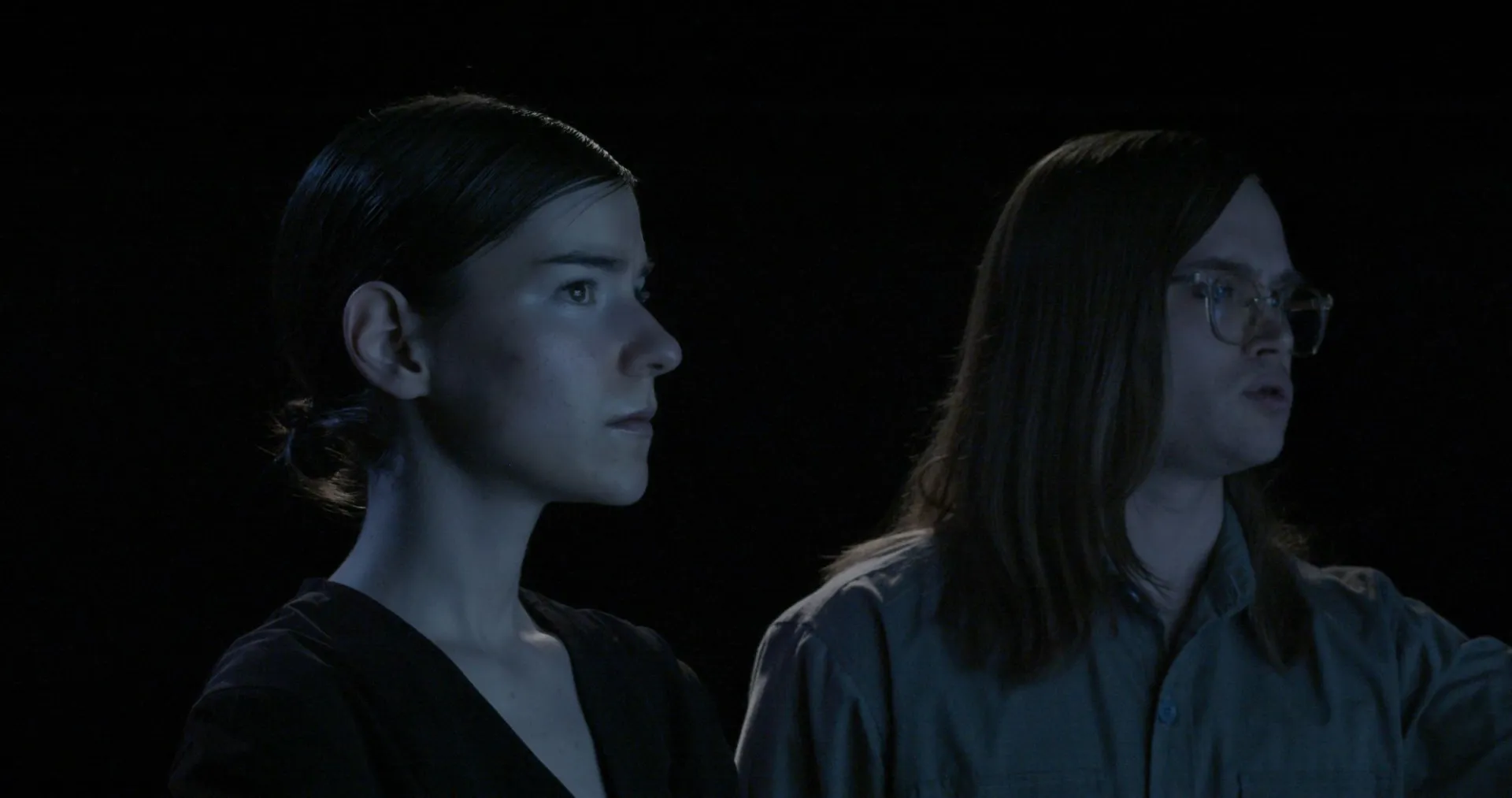
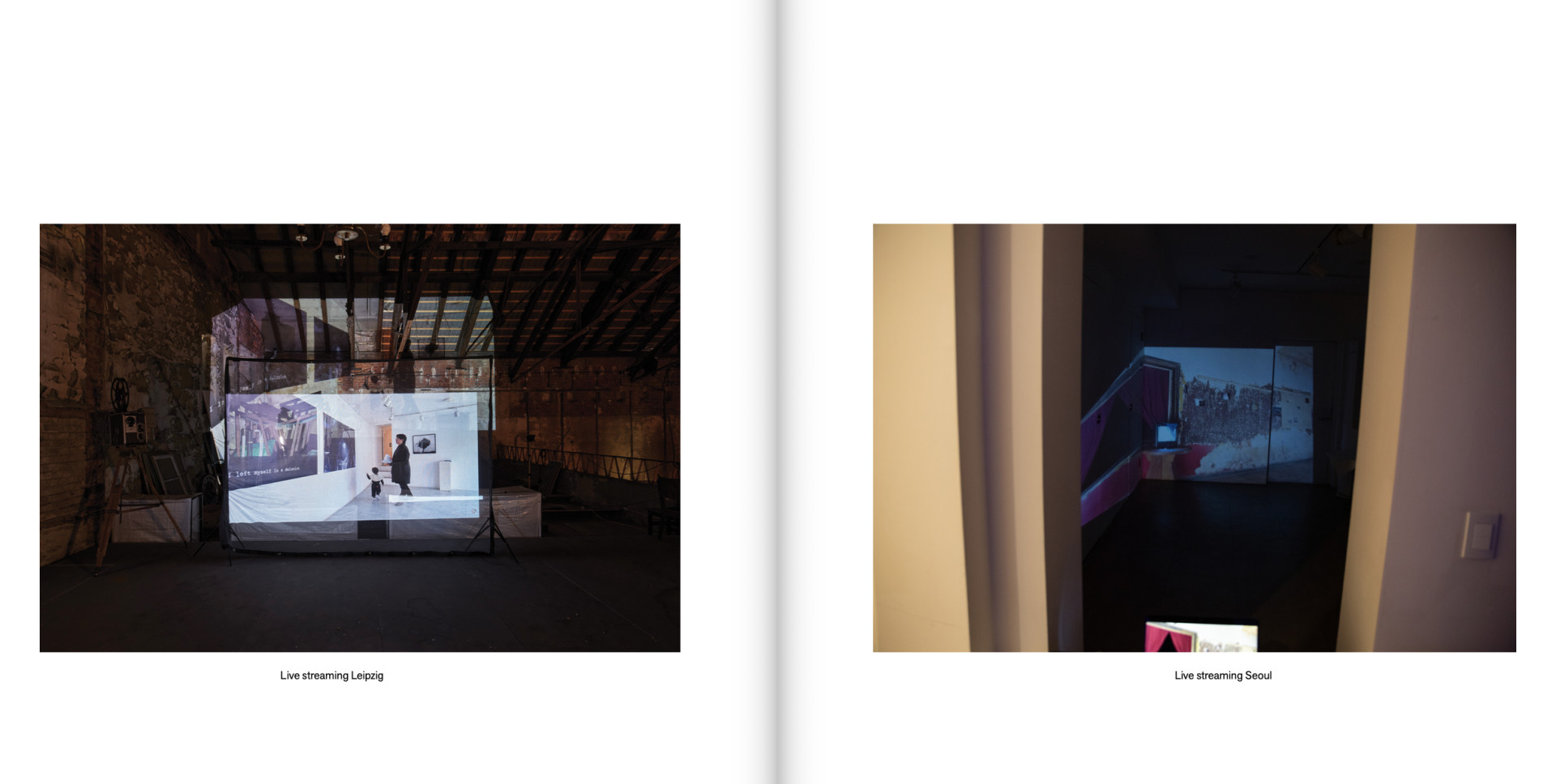
The Expanded Cinema class has produced a collective film as a reflection on images in a world in transition. In We Are Making Good Progress, three connected scenes were realized in the HGB video studio. They show people viewing, editing, and reflecting on images and sounds. The images being negotiated are not shown. Instead, the film focuses on the contexts and effects of images within the artistic process, as well as on affects and image politics in a time of digital image transformation—for example through artificial intelligence, (self-)censorship, and identity. The images seem to disappear more and more, until eventually even language itself is called into question. From the initial idea to the script, direction, and acting, all tasks were distributed within the class.
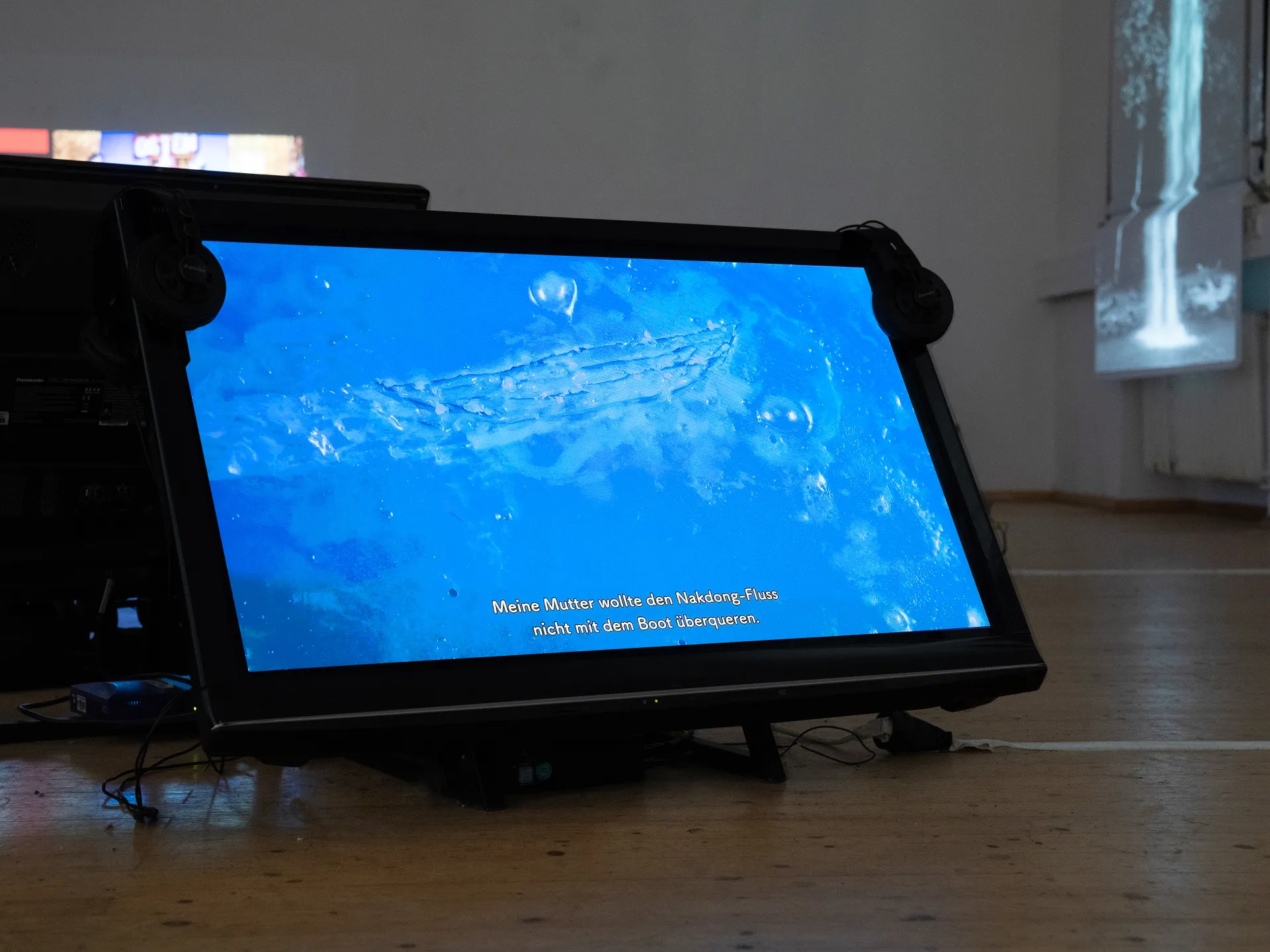
In HGB Lecture Hall 2.34, this collective project is projected on a large scale, while in the hall staged as a film studio, additional individual film works are presented on monitors. These are videos created over the past year through individual research and experimentation. They reflect on AI and the Chinese Cultural Revolution, or on traditional Korean mourning songs, and they portray the last caretaker of an abandoned high-rise building in Belgrade.
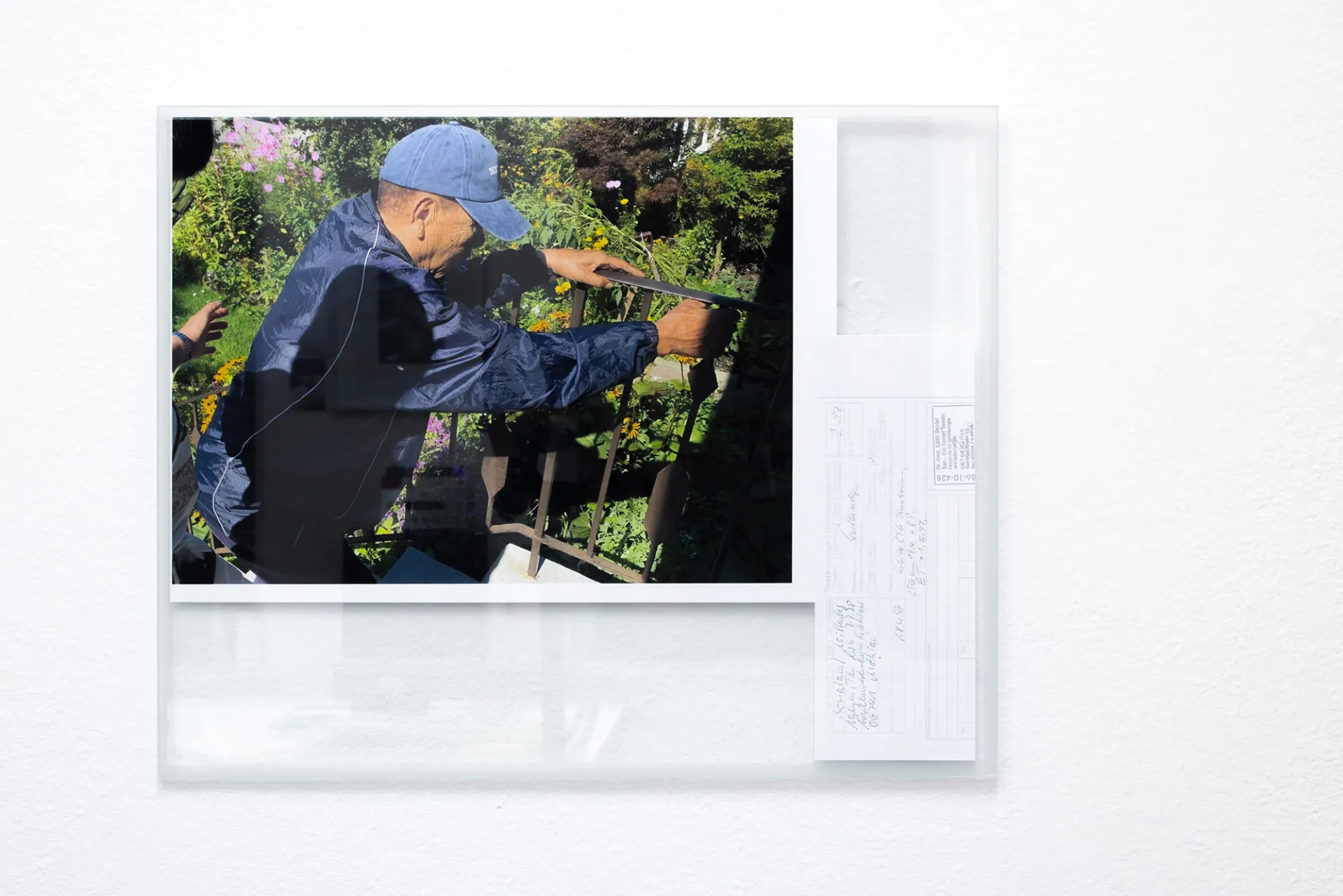
Further works are shown in the Expanded Cinema classroom 2.40. Under the title There is no future, abstract works, sound sculptures and photographs, texts, objects, and video installations are exhibited. Images show the debris of a downed Russian combat drone. Visitors can read a short story about the end of the 20th century. A video contextualizes Colombian coal, and a sculpture floats in the space as if exploded.